U.S. Patent Applications
2026 Top Small Clamshell Containers for Global Buyers
Choosing the right small clamshell containers can influence product protection, presentation, shipping efficiency, and customer trust. Global buyers often need more than a clear plastic box. They must assess material quality, hinge strength, closure performance, ventilation, stackability, and compatibility with automated packing lines. A container that looks strong on a sample table may crack during cold storage or transit.
This guide examines leading options for 2026, with practical attention to produce, bakery items, confectionery, small hardware, and retail products. PET, rPET, PP, and compostable alternatives each offer different advantages. Food-contact suitability, recyclability, temperature tolerance, and supplier documentation should be checked before purchase. Requirements can vary by destination market, product category, and packaging application. One certificate rarely answers every question.
Fit matters. So does consistency.
Experienced buyers also evaluate mold precision, wall thickness, hinge durability, and closure alignment across large production batches. A few defective packs can create avoidable waste and damage a brand’s reputation. Samples should be tested with the actual product, not an empty container. That step is sometimes skipped. It should not be.
The following overview helps importers, distributors, retailers, and manufacturers compare suppliers with greater confidence. It considers technical performance, customization, minimum order quantities, lead times, quality control, and communication reliability. Cost remains important, but the cheapest option may create higher total expenses through breakage, returns, or inefficient storage. Small details matter. The best choice balances protection, appearance, compliance, and long-term supply stability.
What Small Clamshell Containers Are and Where They Are Used
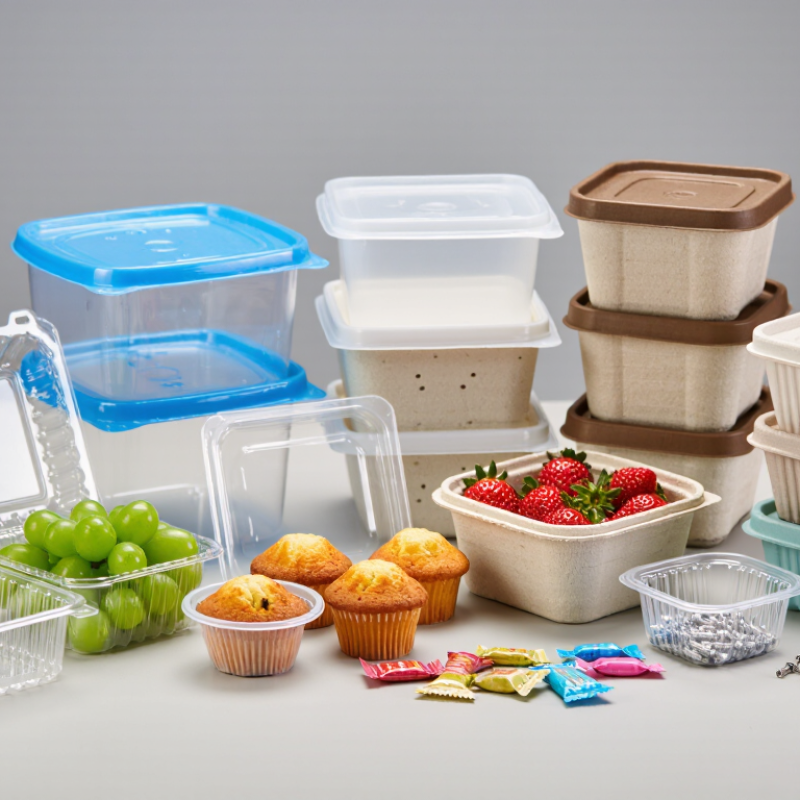
Small clamshell containers are hinged packages with a connected lid and base. They are commonly made from PET, rPET, or polypropylene. The transparent design lets buyers inspect products without opening the package. Small sizes often hold berries, herbs, pastries, sample kits, screws, craft items, or electronic accessories. Their snap closure helps reduce spills during handling, though weak hinges can fail after repeated opening.
These containers appear in supermarkets, bakeries, farmers’ markets, hardware stores, and online fulfillment centers. A produce seller may choose vented openings for berries or leafy herbs. A bakery may prefer a taller base for decorated cookies. Retailers selling small parts often value stackability and clear product visibility. In export shipments, the container must also match carton dimensions and reduce empty space.
In practical packing trials, closure strength matters as much as appearance. A container that looks polished may still crush under warehouse pressure. Buyers should check wall thickness, hinge performance, lid alignment, and resistance to cold or heat. Food-contact applications need material documentation and testing for the destination market. Recycled content can support sustainability goals, but it may affect clarity or stiffness. This trade-off deserves honest review. A small container is not automatically efficient; poor sizing can increase material use and shipping costs.
Key Materials, Sizes, Shapes, and Closure Designs
Small clamshell containers are not one-size-fits-all packaging. Global buyers should match the material with product weight, visibility, and recycling targets. PET and rPET offer strong clarity for berries, hardware, and small electronics. PP tolerates higher temperatures and repeated handling better. However, recycled PET may show slight haze or color variation. That detail can affect premium shelf presentation.
Grand View Research valued the global plastic packaging market at about USD 427.5 billion in 2023, showing the scale behind material and format decisions. For compact goods, common footprints include 100 × 70 × 30 mm, 150 × 100 × 40 mm, and 200 × 140 × 60 mm. These sizes suit accessories, samples, cosmetics, and lightweight components. Rectangular shapes improve carton packing, while round or curved forms reduce sharp contact points. A perfect shape still cannot fix poor product fit.
Closure design deserves practical testing. Snap-lock edges are fast and economical, but repeated opening can weaken the hinge. Tuck closures support manual packing, while heat-sealed lids improve tamper evidence and shipment security. PMMI’s packaging trend research highlights sustainability, material reduction, and operational efficiency as continuing buyer priorities. In my experience, a thinner wall is not automatically better. It may crack in cold transit or buckle under stacking pressure. Test filled samples at low temperature, under compression, and after vibration. A neat prototype can still fail.
2026 Top Small Clamshell Containers for Global Buyers
Key materials, sizes, shapes, and closure designs
| Format | Material | Shape | Closure design | Nominal capacity |
|---|---|---|---|---|
| Snack & berry pack | PET / rPET | Rectangular | Hinged snap-lock | 250 mL |
| Fruit & deli pack | PET / rPET | Rectangular | Four-point snap-lock | 500 mL |
| Bakery & takeaway pack | PP | Square | Tamper-evident hinge | 750 mL |
| Meal & produce pack | PLA / compostable blend | Rectangular | Perimeter snap-lock | 1,000 mL |
How to Compare Top Clamshell Containers for Global Purchasing
When global buyers compare top clamshell containers for 2026, price should not lead the decision. Performance must come first. A container may look clear and rigid, yet fail after cold-chain transport. Check hinge cycles, sealing pressure, stacking strength, and drop-test results. Ask suppliers for recent laboratory reports, not only product photographs.
Material choice also affects purchasing risk. PET offers strong clarity, while rPET can support recycled-content goals but may vary in color and consistency. The OECD Global Plastics Outlook reports that plastic waste reached 353 million tonnes in 2019, with packaging representing about 40%. This makes recyclability and clear material identification practical buying criteria. Review resin codes, recycled content evidence, food-contact declarations, and regional compliance documents. Requirements differ across markets. That part is easy to underestimate.
Tips: Request three samples from separate production batches. Measure wall thickness, hinge movement, closure force, and nesting space. Test them in your actual distribution conditions. A container that survives a warehouse test may still crack in a humid truck. Include mold ownership, minimum order quantity, lead time, and inspection standards in the purchase contract. These details often matter more than a small unit-price difference.
The UNEP report Turning off the Tap states that plastic pollution could be reduced by 80% by 2040 through reuse, recycling, and redesign. Clamshell buyers should therefore compare end-of-life options, not just recycled content. In practice, I would also question whether every feature is necessary. Extra locks, labels, or mixed materials may improve appearance but complicate sorting. The best specification is sometimes less ambitious, and more workable.
Food Safety, Sustainability, Certification, and Export Requirements
2026 Top Small Clamshell Containers for Global Buyers
Food Safety, Sustainability, Certification, and Export Requirements
Small clamshell containers must protect food during filling, stacking, transport, and display. A secure hinge helps prevent leaks and accidental opening. For berries, cut fruit, and bakery items, ventilation and moisture control also matter. Clear packaging should maintain visibility without cracking under cold storage.
Food-contact compliance needs documented evidence, not attractive claims. Ask for migration test reports, material specifications, and a declaration of compliance. Requirements may differ between destination markets, so confirm current rules before production. Recycled content can reduce virgin plastic use, but it must remain suitable for food contact. “Recyclable” is not always practical where local collection systems are limited.
Export preparation includes accurate product descriptions, carton dimensions, net weight, gross weight, and packing details. Buyers may also need a commercial invoice, packing list, certificate of origin, and relevant test records. Confirm the HS classification with a qualified customs professional. Small errors can delay an entire shipment. I have seen sustainability goals weaken when oversized cartons increase empty space and freight emissions. That point deserves more attention. Select containers after testing stack strength, hinge durability, seal performance, and temperature resistance. A sample that performs well on a warehouse shelf may fail after vibration, condensation, and repeated handling.
| 2026 Top Small Clamshell Containers for Global Buyers - Food Safety, Sustainability, Certification, and Export Requirements | ||||||||||
|---|---|---|---|---|---|---|---|---|---|---|
| Rank | Container Type | Typical Capacity | Common Dimensions (L × W × H) |
Material and Typical Use | Food-Contact Temperature Range | Food-Safety and Compliance Considerations | Sustainability Profile | Relevant Certifications or Standards | Export Requirements | Best-Fit Buyer Application |
| 1 | Clear rPET Hinged Clamshell | 125–500 ml | 95–160 × 70–115 × 35–65 mm | Recycled polyethylene terephthalate; suitable for berries, cut fruit, bakery items, and cold ready-to-eat foods. | Typically 0°C to 60°C; verify the supplier’s validated limit. | Food-contact recycled content must come from an approved process and meet the destination market’s migration and purity requirements. | Uses post-consumer recycled content and is commonly recyclable where PET packaging collection and sorting systems exist. | Applicable food-contact rules may include FDA 21 CFR 177.1630, EU Regulation No. 10/2011, and local recycled-plastic authorization requirements. | Provide food-contact declaration, recycled-content evidence, migration test results, resin identification, and packaging-material documentation. | Fresh produce exporters and chilled food distributors |
| 2 | Virgin PET Hinged Clamshell | 100–500 ml | 90–165 × 65–120 × 30–70 mm | Clear polyethylene terephthalate; provides strong product visibility and good resistance to oils and moisture. | Typically 0°C to 60°C; not generally intended for hot-fill or oven use. | Use food-contact-grade resin and verify overall and specific migration for the intended food type, contact time, and temperature. | Widely accepted in PET recycling streams; lightweight designs can reduce material use and transport weight. | FDA 21 CFR 177.1630 and EU Regulation No. 10/2011 may apply, subject to destination-market requirements. | Confirm tariff classification, material composition, food-contact declaration, labeling, and destination recycling-marking rules. | Retail produce, bakery, and confectionery packaging |
| 3 | PP Hinged Clamshell | 150–750 ml | 100–180 × 75–125 × 40–80 mm | Polypropylene; suitable for salads, prepared foods, sauces, and products requiring higher heat resistance than standard PET. | Typically 0°C to 100°C; actual limits depend on resin, design, and closure. | Validate seal performance, hinge fatigue, odor transfer, and migration under the intended hot or cold food conditions. | Recyclable as polypropylene where collection systems accept it; lightweighting is possible without losing rigidity. | FDA 21 CFR 177.1520 and EU Regulation No. 10/2011 may be relevant, along with local food-contact rules. | Include temperature-use declaration, migration testing, material code, packing list, and customs documentation. | Meal-prep, deli, salad, and chilled prepared-food suppliers |
| 4 | PLA Compostable Clamshell | 150–500 ml | 100–165 × 70–115 × 35–65 mm | Polylactic acid; transparent presentation for cold foods, fruit, bakery products, and short-service applications. | Typically 0°C to 45°C; generally unsuitable for hot filling or high-temperature storage. | Food-contact compliance does not automatically mean compostability; verify additives, coatings, inks, and intended food conditions. | Industrial compostability is possible only where suitable commercial composting facilities and collection programs are available. | ASTM D6400, EN 13432, ISO 17088, and applicable food-contact legislation may be used; certification must cover the finished article. | Provide compostability certificate, disintegration and biodegradation evidence, food-contact declaration, and destination-market environmental-label approval. | Events, institutional food service, and markets with composting infrastructure |
| 5 | Molded Pulp Fiber Clamshell | 150–600 ml | 105–180 × 75–130 × 35–75 mm | Plant-fiber or recycled-paper pulp; suitable for dry foods and selected fresh foods when moisture protection is validated. | Typically 0°C to 90°C; performance depends heavily on coatings and moisture exposure. | Assess grease resistance, wet strength, fluorinated substances, coatings, odor, and total migration before food-contact approval. | Often recyclable or compostable depending on fiber, additives, and coating; local paper-recycling acceptance must be confirmed. | Applicable paper and food-contact rules vary by market; compostability claims require EN 13432, ASTM D6400, or equivalent evidence where applicable. | Provide fiber source information, recycled-content evidence, coating composition, food-contact testing, and accurate environmental claims. | Dry bakery, takeaway, catering, and sustainability-led food-service programs |
| 6 | rPP Hinged Clamshell | 150–750 ml | 100–180 × 75–125 × 40–80 mm | Recycled polypropylene; suitable for chilled foods when food-contact recycled content is legally authorized. | Typically 0°C to 100°C; confirm the validated range for the specific recycled resin. | Recycled feedstock must be traceable and processed under an approved decontamination system for the intended market. | Reduces dependence on virgin polymer and remains compatible with polypropylene recycling where facilities exist. | Destination-specific recycled-plastic rules apply; EU Regulation No. 2022/1616 may be relevant for recycled plastic food-contact materials in the EU. | Submit recycled-content percentage, chain-of-custody records, process authorization, migration data, and importer compliance documents. | Large-volume food-service and retail programs seeking recycled content |
| 7 | PET Anti-Fog Produce Clamshell | 125–500 ml | 95–165 × 70–120 × 35–70 mm | PET with an anti-fog surface treatment or design feature; intended for chilled produce where visibility and condensation control are important. | Typically 0°C to 50°C; validate coating performance and food-contact suitability. | Anti-fog agents and coatings must be included in migration, extractables, and food-contact evaluations for the target market. | Usually recyclable in PET systems if the coating, label, and closure do not interfere with sorting or reprocessing. | PET food-contact requirements may include FDA 21 CFR 177.1630 or EU Regulation No. 10/2011; coating compliance must also be documented. | Provide coating specification, migration reports, shelf-life evidence, recycling compatibility statement, and export labeling information. | Berry, grape, mushroom, and high-humidity produce exporters |
| Buyer due-diligence note: Dimensions, capacity, temperature limits, recycled content, and certification status vary by finished design and supplier. Before export, request a current food-contact declaration, migration test report, material specification, certificate of analysis where applicable, packaging-weight data, recycling or compostability evidence, country-of-origin documents, tariff classification, and destination-market labeling compliance. Food-contact approval and compostability certification are separate requirements. | ||||||||||
How to Select Reliable Suppliers and Manage International Orders
2026 Top Small Clamshell Containers for Global Buyers
Selecting small clamshell containers begins with the product, not the supplier’s catalog. Measure the item, including its height and fragile edges. Then request samples in the exact material, size, and closure style. A clear sample can reveal weak hinges, sharp edges, or loose locks within minutes. Ask suppliers for material specifications, production photos, test reports, and quality-control records. For food-contact packaging, request documents that match the destination market. Do not accept a generic certificate without checking its scope.
Reliable suppliers communicate precise details. They explain minimum order quantities, tooling fees, lead times, carton dimensions, and shipping terms. Compare landed costs, not only unit prices. A low quote may hide expensive molds or poor export packing. Confirm whether the supplier can print labels, change colors, or separate orders by size. Write every requirement into the purchase contract. Include tolerances, inspection standards, defect handling, and replacement procedures.
International orders need a simple control plan. Approve a pre-production sample before mass manufacturing. Use independent inspection when the order value justifies it. Check carton counts, pallet strength, moisture protection, and shipping marks before dispatch. I once underestimated carton volume, and the freight bill changed sharply. That mistake still affects my planning. Leave time for port delays and document corrections. Suppliers may promise fast production, but silence after payment is a warning sign. Keep communication in written records, even when the relationship feels friendly. Small omissions can become costly across borders.
Related Posts
-
Top 10 Benefits of Using Small Clamshell Containers for Food Storage?
-
2026 Best Clear Clamshell Containers for Every Use?
-
Top 7 Tips for Choosing the Best Small Clamshell Containers?
-
How to Choose the Right Clear Clamshell Containers for Your Needs?
-
Why Are Plastic Clamshell Containers Essential for Packaging and Storage?
-
10 Best Clamshell Boxes for Packaging and Display Needs?