U.S. Patent Applications
10 Best Clamshell Food Containers for Takeout?
Choosing the right container can shape a customer’s entire takeout experience. A soggy lid, crushed pastry, or leaking sauce can damage an otherwise excellent meal. This guide examines 10 best clamshell food containers for takeout, focusing on practical performance rather than attractive packaging alone.
Each option deserves attention for its material, closure strength, grease resistance, and ability to protect food during transport. We also consider ventilation, stacking stability, serving size, and storage efficiency. A crisp fried chicken coating needs airflow, while a warm rice bowl may need stronger moisture control. Small details matter. Very much.
The evaluation reflects common restaurant workflows, including busy counters, delivery shelves, and crowded refrigerator areas. It also considers food-contact suitability and responsible use according to applicable local requirements. Product claims should still be checked with the manufacturer. Labels can be unclear. No container performs perfectly in every situation.
Some models may look sturdy but flex under pressure. Others close securely yet trap steam inside. This guide recognizes those trade-offs and explains where each design may work best. Cost, presentation, and environmental considerations also deserve balanced attention. A low-priced container is not always economical if it causes spills or customer complaints. Likewise, a compostable-looking package may require specific disposal conditions that are unavailable locally.
The goal is simple: help caterers, restaurant owners, and takeaway operators make informed purchasing decisions. Real kitchens are unpredictable. A useful container must perform beyond the product photograph.
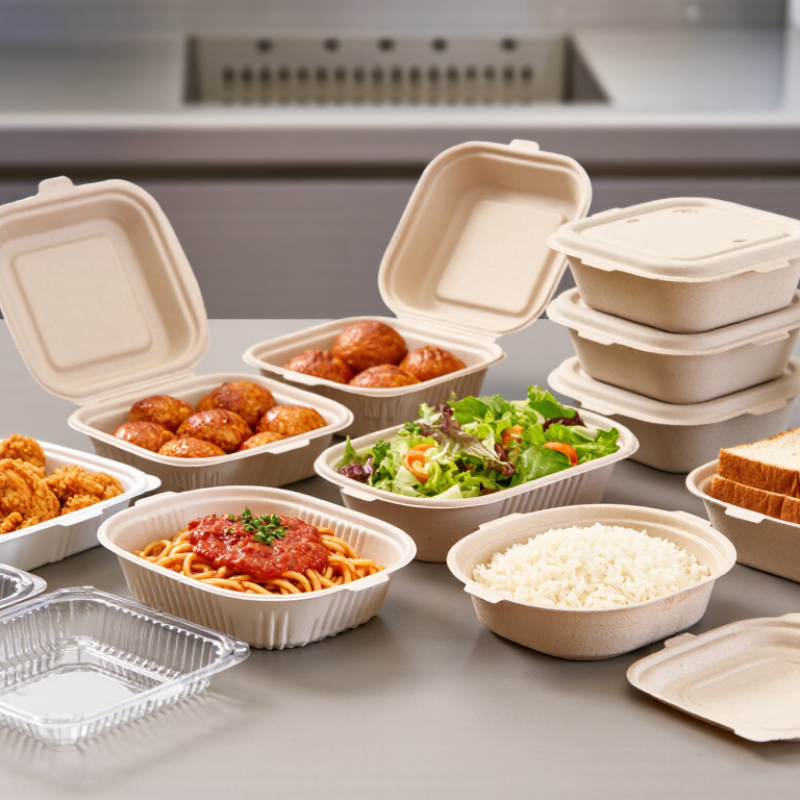
Clamshell Takeout Containers: Definitions, Formats, and Main Applications
Clamshell takeout containers are hinged packages with a base and attached lid. They open like a shell and usually need no separate cover. Common formats include one-compartment, three-compartment, vented, and tamper-evident designs. Materials vary, including polypropylene, PET, molded fiber, and coated paperboard.
Each format serves a different application. Vented clamshells release steam from fried meals, helping preserve crisp edges. Tight-sealing designs suit salads, fruit, deli items, and sauces. Three-compartment versions separate rice, protein, and vegetables. Bakery clamshells prioritize visibility and stackability. Clear plastic improves product presentation, but it may trap condensation when used with hot food. No format wins every meal.
The U.S. Environmental Protection Agency’s 2018 Wasted Food Report recorded 35.3 million tons of wasted food. Better portion control and secure packaging can help reduce avoidable spills and rejected orders. The FDA Food Code also emphasizes cleanable, food-contact surfaces that protect food from contamination. These standards matter more than appearance alone. Packaging recyclability also depends on local collection systems, so broad claims require caution.
Tips: Test containers with real menu items for 30 minutes. Check leaks, lid closure, stacking pressure, and condensation. Confirm microwave suitability from the manufacturer. A frequent mistake is choosing a beautiful container that fails during delivery. Consider meal temperature, travel time, sauce volume, and disposal options before selecting among the ten best clamshell choices.
Food-Safety Benchmarks: FDA Food Code 2022 at 41°F and 135°F
For takeout, a clamshell container is only part of the food-safety picture. The FDA Food Code 2022 sets cold-holding benchmarks at 41°F or below and hot-holding benchmarks at 135°F or above. These temperatures apply to food, not the outside of the container. A warm lid does not prove that the meal inside is safely hot.
Choose containers that suit the food and its journey. A secure hinge can help prevent spills, while compartments keep crisp items away from sauces. But trapped steam can soften fried food, and a thin base may flex under a heavy portion. Check whether the container is intended for hot food, and follow its use instructions. Small details matter. During delivery, keep cold dishes chilled and hot dishes insulated; use a clean food thermometer to check the food when temperature control is important. Timing matters too. A clamshell cannot hold food at a safe temperature indefinitely, and packaging alone is not a substitute for proper handling. The Food Code is a model used by jurisdictions, so local requirements may differ. I would not judge a container by appearance alone; testing it with the actual menu is a sensible, sometimes overlooked step.
Food-Safety Temperature Benchmarks for Takeout
The FDA Food Code 2022 specifies cold holding at 41°F or below and hot holding at 135°F or above. These are food-holding benchmarks, not test results for particular containers. Check local requirements, since adoption of the Food Code varies by jurisdiction.
Material Standards: PP, PET, Fiber, and ASTM D6400 Certification
10 Best Clamshell Food Containers for Takeout?
Material choice affects leakage, heat control, recovery, and disposal. Polypropylene (PP) handles hot meals well and resists cracking during delivery. However, recycling access varies widely by location. Polyethylene terephthalate (PET) offers strong clarity and good oil resistance. The U.S. Environmental Protection Agency reported a 29.1% recycling rate for PET bottles and jars in its 2018 Facts and Figures report. That figure does not guarantee local acceptance for PET food containers. Check the local program.
Fiber containers feel natural and perform well with dry or lightly sauced foods. Moisture barriers can complicate recycling, especially when plastic coatings remain attached. The OECD Global Plastics Outlook reported that only 9% of global plastic waste was recycled in 2019. That statistic deserves attention. A compostable claim also needs careful reading. ASTM D6400 describes requirements for compostable plastics, including disintegration, biodegradation, and ecological safety. It does not mean the container will break down in a backyard pile. Third-party certification and access to commercial composting are both important.
Tips: Test containers with hot soup, oily noodles, and a 30-minute delivery simulation. Inspect hinges, vents, and seal strength. Prefer clear disposal instructions. Avoid choosing fiber only for appearance; a weak lid creates food waste.
I still find no perfect material. Performance, local infrastructure, and customer behavior must be judged together. EPA and OECD data show why attractive packaging claims need practical verification.
Evaluation Criteria: Capacity, Closure Strength, Leak Control, and Stackability
Choosing the 10 best clamshell food containers for takeout requires more than checking size. The 2024 National Restaurant Association report found that 47% of adults pick up restaurant food weekly. That frequency makes capacity and closure reliability practical concerns, not cosmetic features. A 24-ounce container suits rice bowls and salads, while deeper 32-ounce formats handle saucy meals better. Still, oversized containers can encourage shifting during delivery.
Closure strength needs hands-on testing. Fill each container with warm food, close it, and apply gentle pressure around the rim. A secure lid should resist opening without excessive force. I also suggest a 30-minute upside-down leak test using water first. Then test oil-based sauces, which expose weak corners faster. The FDA Food Code recommends holding hot food at 135°F or above and cold food at 41°F or below. Therefore, material performance and ventilation matter alongside lid design.
Stackability affects labor, storage, and transport. Containers should nest without sticking, while filled units should remain stable in a delivery bag. The Foodservice Packaging Institute identifies space efficiency and performance as major packaging considerations across foodservice operations. However, perfect nesting is not always practical. I have seen tightly stacked lids deform after repeated handling. That detail is easy to miss. Evaluation should include capacity checks, closure cycling, leak resistance, and a short simulated delivery test. A container that passes one test may still fail another.
| Container Style | Typical Capacity | Common Material | Closure Strength | Leak Control | Stackability | Best-Suited Use |
|---|---|---|---|---|---|---|
| Small hinged clamshell | About 8–16 fl oz (240–475 mL) | Molded fiber or plastic | Moderate; snap tabs may open under pressure | Low; generally unsuitable for loose liquids | Good when closed and nested evenly | Small sides, snacks, and pastries |
| Medium rectangular clamshell | About 24–32 fl oz (710–950 mL) | Molded fiber or plastic | Moderate to strong, depending on the hinge and latch design | Low to moderate; better for moist foods than broth or thin sauces | Good; broad, flat lids support orderly stacking | Sandwiches, salads, and standard meal portions |
| Large rectangular clamshell | About 40–48 fl oz (1.2–1.4 L) | Molded fiber or plastic | Moderate; large lids can flex if heavily loaded | Low to moderate; keep upright for sauced foods | Fair to good; fill evenly to reduce lid flex | Large entrées and generous combination meals |
| Three-compartment clamshell | About 30–45 fl oz (890 mL–1.3 L) total | Molded fiber or plastic | Moderate; compartments do not reinforce the perimeter latch | Low; dividers help separate food but do not make the container watertight | Good when containers have aligned bases and lids | Meals with separate entrée, side, and accompaniment |
| Deep-base clamshell | About 32–48 fl oz (950 mL–1.4 L) | Molded fiber or plastic | Moderate to strong with a well-fitting perimeter closure | Moderate for thick sauces; not dependable for thin liquids | Fair; deeper bases may be less stable in tall stacks | Bulky portions, pasta, and foods with toppings |
| Clear hinged deli-style clamshell | About 16–64 fl oz (475 mL–1.9 L), depending on size | Clear food-contact plastic | Moderate; inspect that all locking tabs engage | Low to moderate; closure style and lid fit vary | Good when the lid and base are designed to nest | Cold foods, baked goods, and display-ready portions |
| Vented hot-food clamshell | About 24–48 fl oz (710 mL–1.4 L) | Molded fiber or vented plastic | Moderate; vents may reduce pressure but do not strengthen the latch | Low; vents can allow liquid or condensation to escape | Good if the lid has a flat, reinforced top | Fried foods and hot meals where steam release is useful |
| Insulated foam clamshell | About 24–48 fl oz (710 mL–1.4 L) | Expanded polystyrene foam | Moderate; molded tabs can hold securely but may be brittle | Low to moderate; not intended as a liquid-tight seal | Fair; lightweight lids can compress under heavy loads | Hot entrées where insulation and low weight are priorities |
| Bagasse fiber clamshell | About 24–48 fl oz (710 mL–1.4 L) | Molded sugarcane fiber | Moderate; fit depends on molded tabs and product design | Low to moderate; grease resistance varies, and liquids may soak through | Good when dimensions are consistent and lids sit flat | Takeout meals where a fiber-based container is preferred |
| Heavy-duty plastic clamshell | About 32–64 fl oz (950 mL–1.9 L) | Rigid food-contact plastic | Strong when the perimeter locks are fully engaged | Moderate; more secure than an unlatched lid, but not a guarantee against leaks | Very good if designed with stacking ribs or a flat lid | Heavier meals and delivery orders that need a firmer container |
| Capacity figures are approximate ranges for common container formats, not specifications for a particular product. Closure, leak resistance, and stacking performance vary by design and should be checked with the intended food and transport conditions. Clamshells are generally not a substitute for leakproof containers when packaging thin liquids. | ||||||
The 10 Best Clamshell Containers Ranked by BPI, EPA, and ASTM Standards
A useful ranking of clamshell food containers starts with verifiable compostability claims, not vague “green” wording. BPI certification indicates that a product meets applicable commercial compostability requirements, commonly tied to ASTM D6400 or D6868. These standards address materials under managed composting conditions. They do not mean a container will break down in a backyard pile or roadside litter.
EPA guidance can help buyers assess waste practices, but the agency does not certify individual containers. That distinction matters. Check whether the package carries a current certification and whether a local composting facility accepts it. A certified container may still go to landfill if no suitable collection service exists. That part is easy to miss.
Performance belongs in the ranking, too. Fill a sample with hot rice and saucy vegetables, then lift it by one corner. Does the hinge hold? Does the base soften or leak? Look for clear material details, usable compartment depth, and secure closure without excessive pressure. Thin lids can spring open during delivery. A heavier box is not automatically better, though; extra material can add waste. Standards offer a solid starting point, not a perfect scorecard. Real service conditions still matter.
Related Posts
-
2026 Top Berry Containers for Growing Fresh Fruits at Home?
-
Top 10 Clear Plastic Clamshell Containers for Global Buyers?
-

2026 How to Produce Packaging Supplies for Your Business Success?
-
How to Choose Clear Plastic Clamshell Containers for Packaging?
-
What are the Benefits of Using Plastic Fruit Containers?
-
How to Choose the Right Egg Carton for Global Sourcing?