2026 Best Clear Clamshell Packaging for Global Buyers
In 2026, global buyers are demanding packaging that protects products and communicates quality instantly. Clear clamshell packaging remains important for electronics, hardware, cosmetics, food, and retail accessories. Its transparent structure helps customers inspect products before purchase. It also supports barcode visibility, tamper evidence, and efficient shelf presentation. However, visibility alone does not guarantee a strong packaging solution.
Smithers’ The Future of Global Packaging to 2028 reports continued growth in worldwide packaging demand, driven by e-commerce, convenience, and emerging markets. The report also highlights pressure to reduce material use and improve packaging sustainability. Meanwhile, the Ellen MacArthur Foundation continues promoting packaging designed for reuse, recycling, or composting within a circular economy. These findings matter to buyers comparing PET, rPET, PP, and paper-supported alternatives.
Material choice changes everything. PET often provides excellent clarity and impact resistance. Recycled PET can reduce virgin plastic use, but supply quality may vary. PP can support heat resistance and flexible product applications. The final decision should consider product weight, sealing strength, transport conditions, and local recycling systems.
Small details matter. A poorly fitted hinge can damage customer confidence. Excessive plastic can increase costs and disposal challenges. A recyclable claim may also fail without compatible collection infrastructure. Buyers should request technical datasheets, food-contact declarations where relevant, recycled-content evidence, and testing results. ASTM and ISO packaging guidance can support more consistent evaluations, but standards do not replace local compliance checks.
This 2026 guide examines practical clear clamshell packaging choices for global purchasing teams. It compares protection, transparency, customization, logistics, sustainability, and supplier reliability. Some conclusions remain imperfect. Packaging performance depends heavily on the product, market, and end-of-life system. That is exactly why careful evaluation is necessary.
Clear Clamshell Packaging: Definition, Structure, and Main Applications
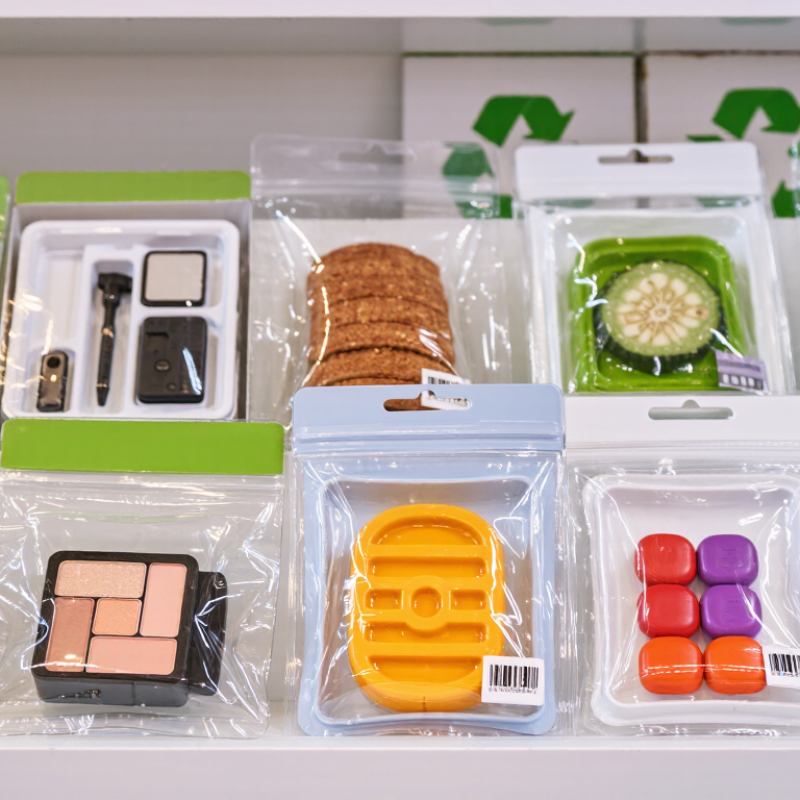
Clear clamshell packaging is a transparent container formed around a product’s shape. It usually uses PET, rPET, or another specified plastic. Its two halves connect through a living hinge. A flange surrounds the cavity and supports sealing or locking. The design keeps products visible while reducing dust, handling, and shelf damage.
In sourcing projects, I check the cavity depth before reviewing appearance. A loose fit can cause movement during transport. A tight fit may damage delicate edges. Buyers should also request material thickness, closure samples, and drop-test results. It is transparent. However, clarity alone does not prove reliable protection. Poorly aligned edges can weaken the pack and frustrate opening.
These packs suit small electronics, hardware, toys, cosmetics, stationery, and selected retail goods. Food applications require suitable materials and verified contact compliance. Global buyers should confirm recycling marks, labeling needs, and packing regulations for each destination. PET often provides strong visibility and useful rigidity. rPET can support recycled-content goals, but color and clarity may vary. Details matter. Humidity, temperature changes, and stacking pressure can affect performance. A practical trial should include filled samples, warehouse handling, and real shipping conditions. Some designs still use excessive plastic. That concern deserves honest review before large-scale production.
Key Materials Used in High-Quality Clamshell Packaging
2026 Best Clear Clamshell Packaging for Global Buyers
Key Materials Used in High-Quality Clamshell Packaging
Material selection shapes clarity, strength, product protection, and recycling potential. PET remains a popular choice for clear clamshell packaging. It offers strong visibility, reliable impact resistance, and consistent forming performance. Recycled PET can reduce virgin plastic use, but its clarity may vary between production batches. Buyers should request samples before approving large orders.
Polypropylene is another practical option for products needing flexibility and better heat resistance. It can perform well during transport, especially when hinges face repeated opening. However, its appearance may look slightly less glass-clear than PET. No material is perfect. A high-quality package still depends on thickness, hinge design, sealing accuracy, and careful quality inspection. Packaging tests should use the actual product, because weight and sharp edges can expose weaknesses quickly.
Tips: Check resin details, recycled content, wall thickness, and closure strength. Ask for migration and performance documents when packaging may contact food or personal-care items. Requirements differ across markets. Confirm local recycling guidance before finalizing the material. A small compression test can reveal more than polished product photos. Also inspect the hinge after repeated opening. It is an easy detail to overlook.
How to Evaluate Clamshell Packaging for Global Purchasing
For global buyers, the best clear clamshell is not simply the most transparent option. It must protect the product, ship efficiently, and support practical end-of-life recovery. The OECD’s Global Plastics Outlook reports that only 9% of global plastic waste was recycled in 2019. Therefore, buyers should request the exact polymer, recycled content, and local recycling guidance. PET or rPET may improve material clarity, but performance depends on thickness, forming quality, and contamination control.
Start with measurable requirements.
Check internal dimensions against the product, including movement space and sharp edges. Test hinge fatigue, locking force, seal security, and opening effort. A sample that looks perfect can still crack during distribution. Use recognized transport protocols, such as ISTA or ASTM testing, for vibration, compression, and drops. Request documented results from the supplier. Do not rely on photographs.
Global purchasing also requires careful supply evaluation.
Confirm mold ownership, minimum order quantities, lead times, carton dimensions, and spare tooling arrangements. Compare landed cost, not only unit price. Smithers’ packaging market analysis identifies sustainability and supply-chain efficiency as major industry priorities through 2028. I would also inspect several production samples, not one approved sample. Small differences matter. A slightly uneven hinge can cause rejected units, extra labor, and delayed retail delivery. Supplier audits, material declarations, and batch traceability strengthen purchasing confidence, although no checklist removes every risk.
Customization, Safety Standards, and International Compliance
2026 Best Clear Clamshell Packaging for Global Buyers
Clear clamshell packaging must balance product visibility, customization, and verified protection. A well-designed shell should open cleanly, resist crushing, and prevent sharp edges from damaging the product. Custom tooling can adjust wall thickness, locking tabs, ventilation holes, and hanging slots. However, decoration and recycled content may affect clarity, sealing strength, or food-contact suitability. Test the final production sample, not only the computer drawing.
Safety documentation should identify resin type, additives, migration results, and manufacturing controls. For food applications, buyers often review United States FDA requirements and European Regulation (EC) No. 1935/2004, plus relevant plastic-material rules. Requirements differ by destination. There is no universal approval.
The OECD’s Global Plastics Outlook reported 353 million tonnes of plastic waste in 2019, showing why material selection and end-of-life claims need evidence. Smithers’ global packaging forecasts also continue to track strong demand for lightweight, transparent formats, but growth does not remove compliance duties.
Packaging should carry traceable batch records, inspection criteria, and transport-test results. Keep it practical. A supplier may provide attractive samples yet lack complete migration or recycling evidence. That gap deserves scrutiny.
International buyers should request third-party test reports, confirm local labeling rules, and review closure performance after heat, humidity, and vibration testing. Not every “recyclable” clamshell is accepted in every collection system. That is easy to overlook.
Sourcing, Cost Factors, and Supplier Selection in 2026
In 2026, clear clamshell packaging buyers are comparing more than unit prices. They are checking visibility, hinge strength, sealing performance, and transport stability. A practical sourcing review begins with the product dimensions. Measure height, width, weight, and sharp edges before requesting samples. Small errors can create loose fits or damaged corners. Ask suppliers for material specifications, thickness tolerances, and test records. Clear PET and rPET may offer different cost, clarity, and forming results.
Tooling is often the hidden cost. A custom mold may reduce long-term unit pricing, but it requires volume commitment. Low-volume buyers should compare standard sizes before approving new tooling. Freight also changes the calculation. Empty clamshells consume space, so carton design and nesting efficiency affect landed cost. Request a full quotation covering tooling, sampling, packaging, inspection, freight terms, and possible replacement parts. Do not trust a single headline price.
Supplier selection needs evidence, not polished photos. Review production capacity, quality procedures, traceability, and experience with similar shapes. Ask for pre-shipment samples from the actual production line. Check hinge cycles, closure force, edge finishing, and clarity under ordinary warehouse lighting. Independent testing can verify material claims and performance. Still, supplier documents may be incomplete. That weakness deserves attention. A clear approval process should define tolerances, defect limits, corrective actions, and communication times. Factory audits are useful, but one visit cannot predict every shipment. Build a small trial order into the purchasing plan.
2026 Best Clear Clamshell Packaging for Global Buyers: Sourcing, Cost Factors, and Supplier Selection
The normalized landed-cost benchmark shows that material and conversion typically account for the largest share of clear clamshell packaging cost, followed by international freight. Buyers should compare suppliers using resin type, recycled-content availability, tooling ownership, minimum order quantity, quality controls, export packaging, and compliance documentation—not unit price alone. Actual costs vary by package size, wall thickness, order volume, destination, and shipping terms.