U.S. Patent Applications
China Best Clear Plastic Clamshell Containers Manufacturer?
Choosing a China-based supplier of clear plastic clamshell containers is not just a price comparison. The right package must protect the product, close securely, stack neatly, and arrive consistently. A bakery’s warm pastry, for example, needs different ventilation and condensation control from a small electronic component. These details matter.
The OECD’s Global Plastics Outlook (2022) reports that plastic waste reached 353 million tonnes worldwide in 2019, while only 9% was recycled. This figure covers plastics broadly, not clamshell packaging alone. Still, it makes material selection and end-of-life claims worth checking. Ellen MacArthur, founder of the Ellen MacArthur Foundation, has described the circular-economy goal as “designing out waste and pollution, keeping products and materials in use, and regenerating natural systems.” For buyers, that means asking specific questions about PET, recycled-content options, trim waste, and local recycling access—not relying on a green label.
Look closely at the factory’s practical evidence. Ask for material specifications, sample approval records, production tolerances, and food-contact documentation where relevant. Test the hinge, rim, and closure with the actual product; a container that looks clear under showroom lights may fog or crack during transport. Small details count.
No supplier is perfect. A careful comparison should weigh quality, lead time, customization, communication, and verifiable sustainability information. The best manufacturer is the one that can explain its process clearly—and provide evidence before the order is placed.
What Clear Plastic Clamshell Containers Are and How They Are Used
China Best Clear Plastic Clamshell Containers Manufacturer?
What Clear Plastic Clamshell Containers Are and How They Are Used
Clear plastic clamshell containers are packages with two connected halves and a built-in hinge. One half holds the product; the other folds over it to close. Many designs use PET or other clear plastics, though material and thickness vary. The transparent walls let shoppers inspect items without opening the package. The contents stay visible. A snap closure helps keep the container shut during display and handling.
These containers commonly hold berries, baked goods, salads, small electronics, craft supplies, and hardware. A grooved base can help keep delicate fruit from rolling, while a shallow tray may suit cookies or pastries. Retailers also use clamshells for small parts because the rigid shape offers some protection from dust and light handling. Fit matters: a container that is too roomy can let products shift, while a tight fit may crush them.
Choose a size and closure suited to the product, and check whether the material is specified for its intended use. Food packaging needs particular care; not every clear plastic container is designed for every food or temperature. Some styles include ventilation holes, while others are sealed more closely. Small details matter. Clamshells can be awkward to open, and recycling options differ by material and location. A clear package looks simple, but its practical performance depends on the product, closure, and disposal route.
Materials and Design Features of Clear Plastic Clamshell Packaging
China Best Clear Plastic Clamshell Containers Manufacturer?
Materials and Design Features of Clear Plastic Clamshell Packaging
Clear clamshell packaging usually relies on APET, recycled PET, or polypropylene. Each material feels and performs differently. APET offers crisp visibility and a firm shape, while recycled PET can reduce reliance on virgin plastic when suitable supply is available. Polypropylene is more flexible, but may look less glass-clear. Material choice should match the product, handling conditions, and local recycling options.
Design details matter at the shelf. A well-fitted cavity keeps berries, small electronics, or baked goods from sliding around. Raised ribs can add stiffness without making every panel thicker. Hinges should open smoothly, and locking tabs should hold through ordinary transport without requiring excessive force. Small details matter. Even a clear package can distort colors under store lighting, so checking a physical sample is useful. Measure wall thickness, inspect the hinge after repeated opening, and test how securely the package stacks. These checks are not perfect; real shipping conditions can still reveal weak corners or awkward closures. A practical design balances visibility, protection, ease of use, and material efficiency.
China Best Clear Plastic Clamshell Containers Manufacturer? - Materials and Design Features of Clear Plastic Clamshell Packaging
| Category | Material or Design Feature | Typical Characteristics | Common Uses and Considerations |
|---|---|---|---|
| Material | PET (polyethylene terephthalate) | Clear, lightweight, and commonly thermoformed into rigid packaging. PET is widely used for food and retail packaging. | Often selected for produce, bakery items, and consumer goods. Recycling acceptance depends on local collection and sorting systems. |
| Material | rPET (recycled polyethylene terephthalate) | PET made partly or wholly from recycled material. Clarity and performance can vary with recycled content and manufacturing specifications. | Can support recycled-content goals where suitable grades and local regulations allow. Confirm food-contact suitability for the intended use. |
| Material | PP (polypropylene) | Lightweight and resistant to many chemicals. It can be made clear, although clarity may differ from PET. | Used in some food and consumer packaging. Heat performance depends on the specific resin and package design; verify before use with hot-fill or microwave applications. |
| Material | Rigid PVC (polyvinyl chloride) | Can provide good transparency and formability. Its collection and recycling options are limited in many areas compared with common PET packaging. | Used in some retail applications. Check local regulations, customer requirements, and end-of-life options before specifying it. |
| Closure design | Integrated hinge and snap closure | A single-piece design connects the lid and base with a hinge; molded tabs or a perimeter rim help keep the package closed. | Provides convenient opening and closing. Closure strength and fit should be tested with the actual product and distribution conditions. |
| Visibility | Clear panels and smooth surfaces | Allow customers to view the contents without opening the package. Surface finish and forming quality affect appearance. | Useful for products where visual inspection supports retail presentation. Clear packaging does not replace required labeling or product protection. |
| Product protection | Formed cavities, ribs, and raised features | Interior shapes can hold products in position, while ribs and contours can improve rigidity without making every area equally thick. | Designed around product dimensions and fragile areas. Check for product movement, pressure points, and fit during transit testing. |
| Fresh-food design | Ventilation openings | Perforations or vents allow air exchange; their number and placement influence airflow. | Common in some produce packaging. Venting should be matched to the product because it may also increase moisture loss or exposure. |
| Retail security | Tamper-evident or reinforced closure | Features such as breakable tabs, sealed edges, or additional locking points can make opening more apparent or more difficult. | May help discourage casual access. The level of protection varies by design and should not be described as tamper-proof unless validated. |
| Storage and shipping | Stacking features and nesting geometry | Rims, feet, or shaped lids can help packages stack. Empty containers may be designed to nest to reduce storage volume. | Check stack stability with the packaged product and ensure nested units separate reliably on the packing line. |
| Customization | Size, wall thickness, labels, and printed areas | Package dimensions and formed features can be tailored to a product. Label placement or printing depends on material, process, and design. | Confirm dimensions, material, closure fit, and labeling requirements with physical samples before production. |
| End-of-life | Material identification and separable components | Clearly identified materials and fewer mixed-material parts can make packaging easier to sort in suitable recycling systems. | Recyclability depends on local infrastructure, material composition, color, labels, and package components; check local guidance. |
How Manufacturers Produce and Quality-Test Clamshell Containers
Clear plastic clamshells begin with resin selection and controlled sheet extrusion. PET is common because it forms into transparent, lightweight packaging. PlasticsEurope’s Plastics – the Fast Facts 2024 report estimates global plastics production reached 413.8 million tonnes in 2023. That broad figure is not specific to clamshells, but it shows why reliable material control matters. Manufacturers check incoming resin, sheet thickness, and clarity before forming begins.
During thermoforming, heated sheet is shaped over a mold, cooled, and trimmed. Operators monitor temperature, forming pressure, and cycle time; small changes can leave thin corners or cloudy patches. Quality checks often include measuring wall thickness, inspecting edges for burrs, and opening and closing hinges repeatedly. A drop test can reveal weak corners. Closure-fit checks matter, too. A clamshell may look perfect and still pop open.
Testing should use samples from different production runs, not only one approved piece. Records of material lots, machine settings, and test results help trace defects and correct them. In practice, visual inspection can miss uneven thickness, so gauges and documented sampling are important. No process is flawless. A rushed line can produce a clear container with a brittle hinge, and that deserves a closer look.
How to Evaluate Clear Clamshell Container Manufacturers in China
When evaluating clear clamshell container manufacturers in China, look beyond a polished sample. Ask for resin specifications, wall-thickness tolerances, batch records, and a documented quality-control process. The OECD’s Global Plastics Outlook (2022) estimates that packaging generated 40% of global plastic waste in 2019. That figure makes material consistency and waste reduction practical evaluation priorities, not minor details. Samples matter. Compare clarity, edge finish, hinge alignment, and closure force across multiple production batches.
Request a factory audit or recent production evidence, then agree on measurable acceptance limits before ordering. Test hinge opening and closing, stacking strength, and transit-drop performance under conditions that reflect your actual use. For food-contact applications, request relevant test reports for the intended material and use. Check whether the supplier can trace each shipment to its production batch and explain how defects are handled. One limitation: an inspection record cannot guarantee every shipment will match. A single attractive sample can hide uneven thickness or brittle hinges, so repeat testing is worth the time.
Industries and Products Commonly Packaged in Clamshell Containers
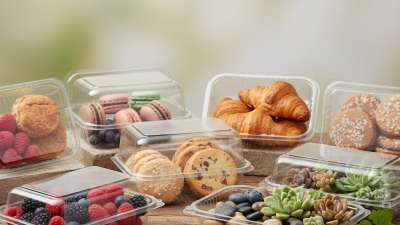
Clear plastic clamshells serve products that need visibility, shape protection, and quick access. Fresh berries, cherry tomatoes, cut fruit, and salad greens often use vented designs to manage moisture. Bakery counters use them for muffins, cookies, and slices of cake, where a hinged lid helps prevent smearing. Delicate items need snug cavities. Loose pastries may shift anyway. That detail is easy to miss when selecting a container from a sample alone.
Clamshells also package small hardware, craft supplies, and electronic accessories. Buyers can compare cavity size, hinge strength, stacking stability, and seal style against the product’s actual weight and handling route. Material matters, too. NAPCOR’s 2023 PET Recycling Report estimated a 29.1% U.S. recycling rate for PET bottles in 2022; this figure does not represent all PET clamshells. Local programs may accept thermoforms differently. Clear plastic is not automatically the better choice, so manufacturers and buyers should verify food-contact suitability, recyclability claims, and transport performance for the intended use.
Common Products Packaged in Clear Clamshell Containers
Examples across industries, grouped by product category
Counts represent the number of illustrative product types included for each category—not market share or packaging volumes. Examples include fresh produce, baked goods, prepared foods, electronics, hardware, and personal-care items.
Related Posts
-
How to Choose Clear Plastic Clamshell Containers in 2026?
-
2026 Best Small Clamshell Containers for Your Business Needs?
-
What is a Clam Shell Container and Its Uses in Packaging?
-
How to Choose the Best Clear Clamshell Containers for Your Needs?
-
2026 Best Clear Clamshell Containers for Every Use?
-
How to Choose Clear Clamshell Packaging for Your Products?