U.S. Patent Applications
How to Choose the Best Corrugated Box Maker?
Choosing the best Corrugated Box Maker requires more than comparing prices on a spreadsheet. A strong supplier protects your products, brand image, and delivery schedule. The right partner understands board grades, flute profiles, printing methods, and compression requirements. In practice, these details matter when boxes face stacked pallets, humid warehouses, or rough transport. Ask about production capacity, minimum order quantities, lead times, and quality controls. Request physical samples before approving a large order. Inspect their edges, folds, print clarity, and resistance to crushing. Small flaws often become expensive problems later.
Look for a manufacturer with proven experience in your industry. Food packaging, electronics, furniture, and e-commerce shipping need different box designs. A reliable Corrugated Box Maker should explain these differences clearly, not hide behind technical language. Review customer references, factory capabilities, and relevant quality certifications. However, certifications alone cannot prove daily consistency. No supplier is perfect. You should still confirm how they handle rejected batches, urgent changes, and late deliveries. Ask for written specifications and keep an approved sample for future comparison. A professional supplier will welcome this process. It creates accountability on both sides. Consider sustainability, too. Recycled content, efficient sizing, and responsible sourcing can reduce waste without weakening protection. During evaluation, calculate the total cost, including freight, storage, damage, and rework. A cheaper box may cost more after one failed shipment. This guide will help you compare suppliers with practical judgment, measurable standards, and realistic expectations. Some decisions may still require compromise, but informed questions reduce avoidable risk.
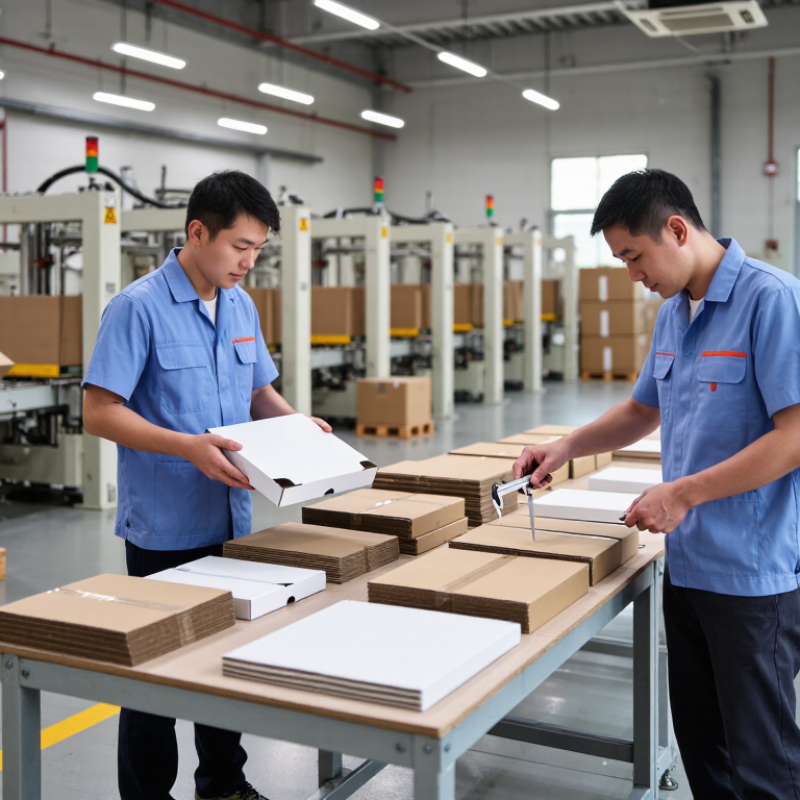
Define Your Box Requirements and Shipping Conditions
Before choosing a corrugated box maker, define the box’s real working conditions. Record product dimensions, weight, fragility, stacking height, and pallet pattern. Note whether shipments face vibration, drops, humidity, freezing temperatures, or long storage. A box designed for a dry warehouse may soften after hours in a damp delivery vehicle.
Specify the required flute profile, edge crush strength, burst strength, and internal fit. Heavy products often need stronger compression performance, not simply thicker board. The International Safe Transit Association’s testing guidance highlights hazards such as drops, vibration, and compression. The U.S. Environmental Protection Agency’s 2018 Facts and Figures report recorded a 96.5% recovery rate for corrugated boxes, but recyclability still depends on clean, suitable materials. Material choices deserve careful review.
Tips: Build a simple shipping profile with distance, transport mode, climate, pallet height, and expected handling. Ask the box maker for test samples using your actual product. Measure compression after moisture exposure. Do not trust appearance alone. I once considered an oversized box safer, but excess empty space allowed movement and increased damage risk. That assumption needed correction. Share your test results with the box maker, and require clear specifications, tolerances, and quality records before approving production.
Compare Box Maker Materials, Equipment, and Production Capabilities
How to Choose the Best Corrugated Box Maker?
Compare Box Maker Materials, Equipment, and Production Capabilities
A reliable box maker starts with suitable corrugated materials. Kraft liner offers a clean surface and strong print quality. Recycled liner can reduce cost, but its strength may vary between batches. Ask about paper weight, flute type, moisture resistance, and compression testing. A box for glass products needs different protection from a box for clothing.
The equipment should match your packaging design. A flexographic printer handles basic graphics efficiently. A rotary die cutter produces windows, handles, and unusual shapes. A creaser-slotter must form accurate folds without crushing the board. Check its maximum sheet size, production speed, setup time, and maintenance records. I once focused too much on hourly output. Changeover delays later reduced the real capacity.
Production capability also depends on quality control. Inspectors should measure board thickness, edge crush strength, print alignment, and box dimensions. Request a sample made with the same materials and equipment used for regular orders. A perfect sample can mislead. Ask how the maker manages rejected sheets, urgent changes, and small production runs. Digital records, documented inspections, and trained operators make results more predictable. Still, no process is flawless. Humidity, paper variation, and rushed adjustments can affect performance, so a capable maker should explain these risks clearly.
Evaluate Printing Options, Customization, and Structural Design Support
How to Choose the Best Corrugated Box Maker?
Evaluate Printing Options, Customization, and Structural Design Support
Choosing a corrugated box maker requires more than comparing unit prices. Ask to see printed samples under warehouse lighting. Colors can shift on recycled kraft paper. Confirm whether flexographic or digital printing suits your volume, artwork, and delivery schedule. A reliable supplier should explain ink coverage, print registration, and acceptable tolerances in writing. Request a physical prototype before approving production. Small details matter.
Customization should support the product, not merely decorate it. Share dimensions, product weight, stacking conditions, and how boxes move through fulfillment. A skilled structural designer can recommend flute profiles, inserts, locking tabs, or reinforced corners. They should also test compression and drop performance when appropriate. I once treated an attractive dieline as a finished solution. It looked efficient, but the narrow locking tab failed after repeated handling. That mistake was useful, though avoidable.
Tips: Ask for a design review with production and packing staff present. Check that samples match the approved dimensions. Discuss moisture exposure, pallet patterns, and storage time. Keep a written specification for board grade, flute, print colors, and testing methods. Do not accept vague promises. Yet remain open to revision; early assumptions are often wrong. A maker with practical testing experience will challenge weak ideas respectfully, explain trade-offs clearly, and document every change.
Check Quality Standards, Certifications, Pricing, and Minimum Orders
Choosing a corrugated box maker requires more than comparing attractive prices. Inspect the supplier’s quality standards, testing process, and production records. Ask for recent reports covering burst strength, edge crush strength, compression, and moisture resistance. These figures show whether boxes can survive stacking, transport, and changing warehouse conditions. Ask for evidence.
Certifications can strengthen confidence, but certificates alone prove little. Check their scope, issuing organization, expiration date, and connection to the actual factory. Quality systems such as ISO 9001 may support consistent production. Responsible material certifications can also verify fiber sourcing. Request a sample made with the same paper grade, flute profile, printing, and dimensions as your order. I once accepted a sample with stronger board than the final shipment, and the difference caused avoidable damage.
Pricing needs a full breakdown. Include board grade, printing plates, tooling, setup fees, delivery, packaging, and future design changes. A low unit price may hide expensive freight or weak materials. Numbers need context. Minimum order quantities deserve equal attention. A large order may reduce the unit cost, yet it can consume storage space and tie up cash. Ask whether mixed sizes, phased deliveries, or a pilot run are available. Small orders matter. Confirm lead times, inspection procedures, replacement terms, and how complaints are documented. I would also compare two or three written quotations, because assumptions often disappear inside a convenient spreadsheet.
How to Choose the Best Corrugated Box Maker? - Check Quality Standards, Certifications, Pricing, and Minimum Orders
| Evaluation Area | Recommended Benchmark | How to Verify It | Typical Commercial Range | Suggested Importance |
|---|---|---|---|---|
| Board Strength | Use the required Edge Crush Test (ECT) grade for the product weight and stacking height. Common shipping grades include 32 ECT and 44 ECT. | Request recent ECT test reports and compare the board grade with the applicable packaging specification. | Light-duty cartons: 23–32 ECT; heavier or export cartons: 44 ECT or higher. | Very High |
| Bursting Strength | Select a burst-strength rating appropriate for puncture resistance, product weight, and handling conditions. | Ask for Mullen burst-test results or an equivalent laboratory report, especially for sharp or dense products. | Typical single-wall packaging: approximately 125–275 psi, depending on board construction. | High |
| Dimensional Accuracy | Finished dimensions should normally remain within approximately ±3 mm, subject to box style and manufacturing tolerance. | Review a pre-production sample and measure internal length, width, height, slot depth, and panel alignment. | Tighter tolerances may increase tooling, setup, and inspection costs. | High |
| Moisture Resistance | For humid storage or ocean shipping, consider moisture-resistant paper, coatings, or protective packaging. | Confirm the paper treatment, storage conditions, and any water-resistance or humidity test results. | Basic kraft board: lowest cost; coated or treated board commonly adds about 5%–20%. | Medium to High |
| Quality Management | A documented inspection process should cover incoming paper, printing, die-cutting, gluing, dimensions, and final packing. | Request quality-control procedures, sample inspection records, corrective-action records, and traceability information. | Formal ISO 9001-based systems may improve consistency but can be reflected in the quoted price. | High |
| Certifications and Materials | For sustainability-sensitive projects, request responsibly sourced paper documentation such as FSC chain-of-custody certification where applicable. | Check certificate validity, scope, issuing body, recycled-content claims, and whether the certificate covers the supplied material. | Recycled-content or certified paper may vary in price with fiber availability and order volume. | Medium |
| Unit Pricing | Compare quotations using the same dimensions, board grade, print coverage, box style, delivery terms, and tooling assumptions. | Request a fully itemized quotation that separates box cost, printing plates, dies, setup, packing, freight, and taxes. | Standard single-wall cartons often range from about $0.20–$2.00 per unit, depending on size and volume. | High |
| Minimum Order Quantity | Choose a supplier whose minimum order fits your inventory capacity and forecasted demand. | Confirm the minimum quantity per size, artwork, print version, board grade, and production run. | Plain stock cartons may start near 100–500 units; custom printed cartons commonly begin around 500–2,000 units. | High |
| Sampling and Prototyping | A physical sample should be approved before mass production, particularly for fitted inserts, die-cut shapes, and automated packing lines. | Evaluate fit, compression, print quality, folding, gluing, barcode readability, and pallet performance. | Prototype fees commonly range from $20–$150 and may be credited against a larger order. | Very High |
| Lead Time and Delivery | For standard custom cartons, allow approximately 7–20 business days after artwork and specifications are approved; complex projects may take longer. | Confirm production time, sample approval deadline, shipping method, delivery location, and contingency procedures in writing. | Expedited production and freight can increase total cost by approximately 10%–30% or more. | High |
Assess Delivery Reliability, Customer Service, and Long-Term Fit
How to Choose the Best Corrugated Box Maker?
Assess Delivery Reliability, Customer Service, and Long-Term Fit
A dependable box maker should deliver when your production schedule requires it. Ask for recent delivery records, not broad promises. Check whether shipments arrive on the agreed date, in the correct quantities, and without crushed bundles. A practical test is a small trial order. Track the promised date, actual arrival, packaging condition, and response time when questions arise. Confirm how the supplier handles weather delays, material shortages, and urgent replacement orders. Clear communication matters here.
Customer service becomes visible when specifications change. Your contact should explain flute types, board strength, print limits, and moisture considerations in plain language. Request a written quotation with tolerances, lead times, setup charges, and approval steps. Reliable teams usually confirm artwork and dimensions before production. They also share a realistic escalation path. No vague promises. Ask who answers after normal business hours, if that support is available.
Long-term fit requires more than a pleasant first order. Review production capacity, quality checks, sustainability documentation, and payment terms. Discuss how the maker will support seasonal volume increases without lowering consistency. A quarterly performance review can compare defect rates, delivery accuracy, and complaint resolution. Keep your own records; memory is not evidence. One weakness may be acceptable, but repeated surprises deserve attention. Sometimes the best choice is not the lowest quote, but the supplier that learns from a failed shipment and changes its process.