What Is a Paper Bowl and How Do You Choose One?
A Paper Bowl looks simple, but its performance depends on more than shape and color. The right choice must match the food, serving temperature, holding time, and disposal system.
Packaging consultant Dennis Salazar offers a practical reminder: “Good packaging protects the product without creating unnecessary material waste.” That principle matters when comparing bowl sizes, paper weight, coatings, and production quality. A thin bowl may suit dry snacks, yet struggle with hot soup. A sturdy rim feels safer in the hand. A weak base can soften after several minutes.
Small details matter.
This guide explains what a Paper Bowl is and how to choose one with greater confidence. You will see how paperboard differs from ordinary paper, why moisture resistance matters, and how coatings affect recycling or composting options. Some bowls use plastic barriers, while others use water-based or plant-derived coatings. Neither option should be judged by marketing language alone. Ask for technical data, food-contact documentation, and disposal guidance.
The best bowl is not always the thickest. It should provide enough strength without unnecessary weight. Consider diameter, depth, stackability, lid fit, storage space, and transport conditions. A bowl used at a busy food counter faces different demands from one used for a short event.
There is no perfect choice.
Real performance can vary between suppliers and batches. Testing with the actual food is still essential. Fill the bowl, wait fifteen minutes, and check the base, rim, and outer surface. That simple step may reveal weaknesses that a product photograph hides.
Definition and Basic Structure of a Paper Bowl
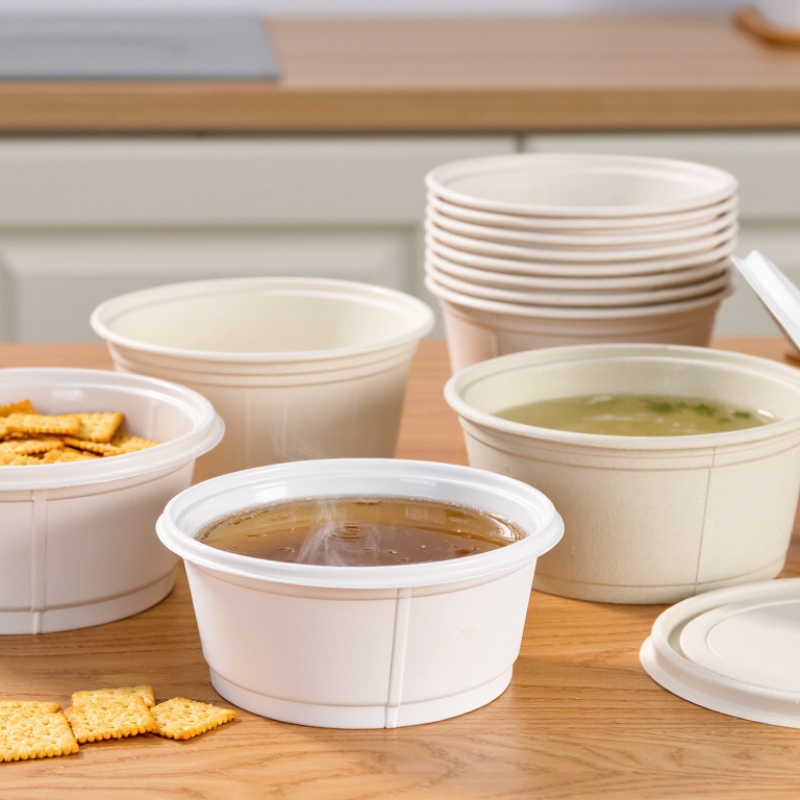
A paper bowl is a disposable container shaped from food-grade paperboard. Unlike a flat paper plate, it has raised sidewalls that hold liquids, grains, snacks, or mixed meals. Its basic structure includes a circular base, sloped walls, and a rolled rim. The rim adds stiffness and feels smoother against the mouth. It also helps prevent small leaks during serving.
The paperboard forms the bowl’s skeleton. A thin coating may cover the inside, outside, or both surfaces. This layer can improve resistance to water, oil, and heat. However, not every coating performs equally well. A bowl for soup needs stronger moisture protection than one for dry cereal. When I inspect a bowl, I press the base gently and check whether it flexes too much. A weak base can sag when filled.
Size and depth also matter. A wide, shallow bowl suits salads and desserts, while a deeper shape holds broth more securely. Look for an even rim, clean folds, and a flat base. There should be no strong odor, loose fibers, or visible coating cracks. Supplier documents should confirm food-contact suitability and intended temperature range. I sometimes choose a slightly heavier bowl for hot meals, though that judgment is not perfect. A thicker bowl can feel safer, but it may use more material than necessary. unerquicklich
Materials and Manufacturing Methods
What Is a Paper Bowl and How Do You Choose One?
Materials and Manufacturing Methods
A paper bowl is a shaped container made from paperboard, often with a moisture-resistant coating. Its performance depends on fiber quality, board thickness, coating type, and forming accuracy. Virgin fiber usually gives a smoother surface and stronger edges. Recycled fiber can reduce resource use, but its strength may vary.
It matters. Water-based coatings, polyethylene coatings, and plant-based barrier layers each behave differently. Some resist hot soup well, while others soften during extended contact.
Manufacturing begins with paperboard production and surface coating. Large sheets are printed, dried, and cut into precise blanks. A forming machine then bends each blank around a mold. Heat or pressure seals the sidewall and bottom panel. Poor sealing can create tiny leaks near the base. I have seen bowls pass a quick visual check but fail after several minutes with hot broth. That small delay changes the evaluation.
Production teams should inspect rim roundness, bottom stability, coating coverage, and seal strength. They should also test both cold and hot foods.
Choosing a bowl requires matching the material to its use. Lightweight board suits dry snacks and short serving periods. Heavier board supports dense meals and reduces sidewall collapse. Check the stated capacity, temperature range, and food-contact documentation. A microwave-safe claim also needs careful verification, especially when coatings or printed areas are involved. Not every sturdy bowl handles oily food.
A simple leak test helps. Fill the bowl, wait ten minutes, and examine the underside and rim. Slight warping may seem harmless, but it often signals weak moisture resistance.
Common Types, Sizes, and Functional Features
A paper bowl is a lightweight container made from paperboard, usually with a moisture-resistant lining. It holds soups, salads, desserts, rice, and other prepared foods. The right choice depends on temperature, weight, serving size, and expected holding time. A bowl that works for dry snacks may soften quickly with hot broth.
Common types include single-wall, double-wall, and insulated bowls. Single-wall bowls suit cold foods and short serving periods. Double-wall designs feel sturdier and reduce heat transfer to the hand. Coated bowls resist moisture and grease more effectively. Compartment bowls separate sauces, vegetables, or toppings.
For soup, a wide rim and stable base are practical details.
I once underestimated the value of the rim. A narrow rim made carrying a full bowl awkward.
8–32 oz
or about 240 to 950 milliliters.
Sizes often range from 8 to 32 ounces, or about 240 to 950 milliliters. Small bowls fit fruit, samples, and desserts. Medium sizes work well for salads, noodles, and rice dishes. Larger bowls handle soup or generous meal portions.
Leave some space near the top. Overfilling increases spills and weakens the eating experience.
Functional features deserve close attention.
Check the lining material, grease resistance, stackability, and lid compatibility. A rolled rim can improve strength and drinking comfort. Some bowls tolerate reheating, but instructions should be checked every time. “Microwave-safe” is not a universal promise. Heat, time, and food moisture can change performance.
My own selection process still needs improvement: appearance often attracts attention before structure does. That habit deserves correction.
How to Choose a Paper Bowl for Different Uses
What Is a Paper Bowl and How Do You Choose One?
A paper bowl is a shaped food container made from paperboard, often with a moisture-resistant lining. Its best choice depends on the food, serving time, and disposal conditions. For soup or porridge, choose a deeper bowl with a firm rim and strong leak resistance. A wide, shallow bowl works better for salads, rice, fruit, and snacks. Check the stated capacity, not only the bowl’s appearance.
Heat matters. A bowl for hot food should remain stable without softening or releasing unpleasant odors. Read the manufacturer’s temperature guidance before serving steaming soup or oily dishes. For cold desserts, a lighter bowl may be enough. For takeaway meals, select a thicker base and secure edge. Test one bowl with the actual food. Small differences can matter.
I once underestimated how quickly a thin bowl weakened under hot noodles. It looked suitable, but the bottom bent after several minutes. That experience changed my selection process. I now check thickness, lining material, lid compatibility, and stacking strength. A compostable label does not guarantee suitable disposal everywhere. Confirm local facilities and product instructions. The most practical bowl is not always the thickest one. Extra material can increase waste and cost, so the choice still deserves reflection.
What Is a Paper Bowl and How Do You Choose One?
Choose a paper bowl by matching its capacity to the food and serving size. These common bowl capacities are suitable for different everyday uses.
How to choose: An 8 fl oz bowl works well for snacks and small portions, 12 fl oz is suitable for soup or cereal, 16 fl oz offers space for salads and standard meals, and 20 fl oz is better for larger meals or foods with toppings. Check the bowl’s food-contact rating and heat resistance before serving hot food.
Safety, Sustainability, and Disposal Considerations
A paper bowl is usually made from paperboard shaped into a lightweight container. Many bowls contain a thin lining that helps resist soup, oil, or moisture. That lining may be plastic, plant-based, or another treated material, so appearance alone proves little. Check the packaging for food-contact guidance, temperature limits, and microwave instructions. A bowl that handles cold salad may soften beside hot noodles. Never use a cracked, leaking, or badly warped bowl.
Safety also depends on how long food stays inside. Hot, greasy food can weaken some materials over time. Use a suitable utensil, and avoid reheating unless the instructions clearly allow it. I used to assume every paper bowl was equally safe. That assumption is not reliable. Clear product information matters more than a natural-looking surface.
Sustainability requires more than choosing paper. Select the smallest practical size, avoid unnecessary double-bagging, and choose recycled fiber when its quality suits the meal. Disposal can be confusing. A clean, uncoated bowl may fit local paper recycling, while a food-stained bowl often does not. Compostable bowls require an accepted commercial composting facility; home compost may not break them down. Remove leftover food, follow local collection rules, and check the lining before disposal. No option is perfect.
