U.S. Patent Applications
Top 10 Egg Carton Types for Global Buyers?
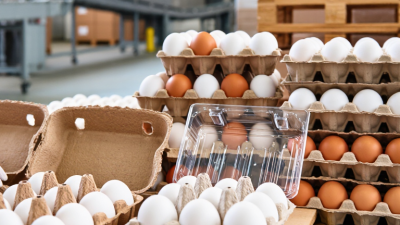
Choosing the right egg carton now involves more than comparing price and appearance. Global buyers must evaluate protection, material performance, printing quality, stacking efficiency, and end-of-life options. The market is also shaped by rising egg consumption and increasingly demanding packaging expectations.
The OECD-FAO Agricultural Outlook 2024–2033 identifies poultry products as important contributors to future global food supply growth. FAOSTAT data also shows the enormous scale of egg production worldwide, creating steady demand for reliable transport packaging. At this volume, a small design weakness can cause significant breakage across warehouses, trucks, and retail shelves.
This guide examines ten major egg carton types, including molded fiber, recycled paper pulp, plastic, foam, molded PET, clear-lid, hinged, bulk, retail, and specialty cartons. Each format serves a different purchasing purpose. Molded fiber may support sustainability goals, while plastic can offer moisture resistance and consistent dimensions. However, material choice alone does not prove environmental performance.
Look beyond color and marketing language.
The Ellen MacArthur Foundation and leading packaging assessments repeatedly emphasize design for resource efficiency, recovery, and practical reuse or recycling systems. Local collection infrastructure matters. A carton labeled recyclable may still face limited recovery options in its destination market. That point is easy to overlook.
Our comparison focuses on real procurement details, such as carton strength, egg visibility, pallet utilization, labeling space, and supplier consistency. It also considers temperature changes, humidity, export handling, and food-contact expectations. No ranking fits every market perfectly. Buyer feedback, testing records, and regional regulations should shape the final decision. In practice, the best egg carton is the one that protects the product, meets local requirements, and performs reliably from farm to consumer.
What Are Egg Cartons and Why Do Their Types Matter?
Top 10 Egg Carton Types for Global Buyers
What Are Egg Cartons and Why Do Their Types Matter?
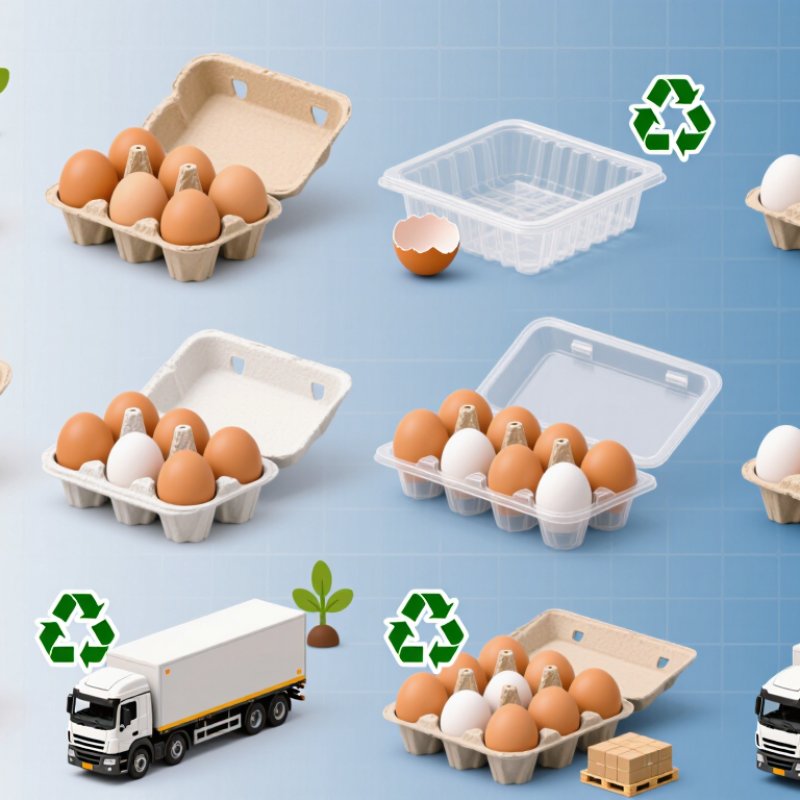
Egg cartons are protective packages that separate eggs, reduce movement, and support safer handling during storage and transport. Common types include molded pulp, recycled paper, plastic, foam, hinged, open-top, six-egg, twelve-egg, eighteen-egg, and export cartons. Each design offers different protection, cost, weight, and presentation.
The carton type matters because eggs face pressure, vibration, humidity, and temperature changes across global supply chains. Molded pulp absorbs small impacts and supports recycling goals. Plastic cartons resist moisture and allow clear product visibility. Foam provides strong cushioning, but disposal expectations may differ by market.
A carton that feels sturdy in a warehouse may perform poorly during long-distance transport. Practical compression and drop tests should guide purchasing decisions.
Tips:
Match carton strength with the route, stacking height, and egg size. Check ventilation, closure quality, and food-contact suitability before ordering. Confirm destination-market packaging requirements with qualified local specialists. Small details matter, especially when cartons are handled repeatedly. No carton fits every shipment perfectly. Buyers should review damage records, not only unit prices. A lower-cost option may create higher losses through cracked eggs, rejected deliveries, or inefficient storage. Suppliers should also provide material specifications and consistent production samples for comparison.
How Do Paper Pulp Egg Cartons Protect Eggs During Shipping?
Paper pulp egg cartons do more than hold eggs; they manage impact, pressure, and movement during shipping. Each molded pocket cradles one egg and keeps neighboring shells apart. The raised separators absorb pressure when cartons are stacked. Their irregular surfaces also create small crush zones during sudden handling.
Practical packing trials show that fit matters as much as material. A carton should hold eggs firmly without squeezing them. Strong outer ribs help resist compression from upper boxes. Ventilation openings reduce trapped heat and moisture during longer routes. However, pulp is not waterproof. A damp carton can soften, deform, and lose protection before delivery.
Good shipping practice adds a correctly sized outer box, internal spacing, and visible handling guidance. Drop tests, vibration tests, and compression checks can reveal weak corners or loose pockets. Results may change with egg size, humidity, stacking height, and transport distance. This is where buyers need evidence, not attractive samples. They should request material specifications and test records from qualified suppliers.
No carton prevents every breakage. That deserves honest attention. A stronger design may also use more material, increase weight, or reduce storage efficiency. Buyers should compare protection, cost, recyclability, and local disposal conditions before placing large orders. In real distribution, careful packing remains essential, even with well-designed molded pulp protection.
What Makes Plastic Egg Cartons Suitable for Retail and Transport?
Plastic egg cartons suit retail and transport because they balance visibility, protection, and handling efficiency. Their clear or semi-clear surfaces let shoppers inspect shell condition without opening the package. Retail staff can also check cracked eggs faster. In our packaging evaluations, molded plastic cartons resisted compression better than thin paper packs during stacked pallet movement.
The material helps control moisture and supports stable carton shapes in refrigerated storage. Small ventilation openings can reduce condensation, although poor airflow may still affect freshness. Secure locking tabs keep cartons closed when delivery vehicles turn sharply. This matters when cartons travel across uneven roads. Plastic cartons are also easy to wipe, but cleaning requirements depend on the design and local food-contact rules.
Transport teams should test carton performance with real egg sizes, stacking heights, and temperature changes. A carton that works well in a store may fail during long-distance handling. Drop tests can reveal weak hinges or loose closures. I have seen attractive packaging waste space on pallets, increasing shipping costs. That flaw is easy to overlook. Recyclability also requires practical planning, since collection systems differ between markets. A transparent carton may improve shelf appeal, yet excessive material can reduce its environmental advantage. Buyers should compare protection, weight, recyclability, and total logistics performance before choosing a plastic format.
Top 10 Egg Carton Types for Global Buyers? – What Makes Plastic Egg Cartons Suitable for Retail and Transport?
| No. | Egg Carton Type | Typical Material | Common Capacity | Retail Visibility | Cushioning and Stackability | Moisture Resistance | Retail Suitability | Transport Suitability | End-of-Life Considerations |
|---|---|---|---|---|---|---|---|---|---|
| 1 | Molded Pulp Open-Top Carton | Recycled paper fiber or molded pulp | 6, 12, or 18 eggs | Low; eggs remain largely visible | Good cushioning; designed for nesting and stacking | Low to moderate unless treated | Suitable for traditional grocery presentation | Good for dry, controlled distribution | Generally recyclable with paper where accepted; fiber quality may decline after wetting |
| 2 | Molded Pulp Hinged Carton | Molded paper fiber with an integrated lid | 6 or 12 eggs | Moderate; lid may include a label area | Good shock absorption and stable stacking | Low to moderate | Strong option for value-focused retail packs | Good for regional and domestic transport | Typically recyclable as paper fiber if clean and accepted locally |
| 3 | Paperboard Folding Carton | Folding boxboard with a paper or molded-fiber insert | 6 or 12 eggs | High; provides a large printable surface | Moderate; insert quality is critical | Low unless coated or laminated | Well suited to premium graphics and nutritional information | Suitable for short and medium-distance distribution | Paper recyclability can be reduced by plastic films, coatings, or mixed materials |
| 4 | Clear PET Hinged Carton | Clear polyethylene terephthalate (PET) | 6, 12, or 18 eggs | Very high; product is visible from multiple angles | Good dimensional stability and impact resistance when properly designed | High resistance to incidental moisture | Excellent for visual quality checks, premium presentation, and barcode labeling | Very suitable for retail and long-distance transport; rigid geometry helps protect eggs | Widely recyclable where PET packaging collection and sorting are available; clear PET is generally preferred over dark formats |
| 5 | Recycled PET (rPET) Carton | Post-consumer recycled PET, usually clear or lightly tinted | 6, 12, or 18 eggs | High; transparent packaging supports product inspection | Good, subject to recycled-resin quality and wall thickness | High resistance to normal retail moisture exposure | Strong choice for buyers seeking recycled content with plastic-packaging performance | Good for palletized distribution; precise fit reduces movement inside the pack | Can enter PET recycling streams where accepted; recycled content availability varies by market |
| 6 | Polypropylene (PP) Reusable Carton | Rigid or semi-rigid polypropylene | 6 or 12 eggs | Moderate to high; may be translucent or opaque | Very good durability and repeated-use performance | High resistance to moisture and many household cleaning agents | Suitable for refill systems, farm shops, and closed-loop retail programs | Excellent for repeated handling; return logistics are needed for best results | Reusable when collected and washed correctly; PP recycling depends on local infrastructure |
| 7 | HDPE Transport Tray or Crate | High-density polyethylene (HDPE) | Usually 12, 20, or more eggs | Low to moderate; normally used with secondary packaging | Excellent strength, nesting, and load-bearing capability | High resistance to water and rough handling | Best for bulk handling, foodservice, farms, and distribution centers | Excellent for returnable logistics and repeated pallet movement | Reusable; HDPE is recyclable where collection and sorting systems accept it |
| 8 | Expanded Polystyrene Foam Carton | Expanded polystyrene (EPS) | 6 or 12 eggs | Low; generally opaque | Good cushioning and thermal insulation at low weight | High resistance to water, but vulnerable to crushing and tearing | Useful where insulation and low weight are priorities, subject to local regulations | Good shock protection, but bulky and less suitable where foam restrictions apply | Recycling access is limited in many regions; some jurisdictions restrict certain foam packaging |
| 9 | PLA Bioplastic Carton | Polylactic acid (PLA), often made from plant-derived feedstocks | 6 or 12 eggs | High when produced as a clear carton | Moderate; heat resistance and brittleness must be evaluated | Moderate under normal dry retail conditions | Suitable for sustainability-led specialty retail when appropriate facilities exist | Suitable for controlled distribution; avoid assuming performance identical to PET | Usually requires commercial composting; it may contaminate conventional PET recycling if mis-sorted |
| 10 | Molded Fiber Carton with Transparent Window | Molded fiber combined with a cellulose film or plastic window | 6 or 12 eggs | High; partial visibility combines protection with product display | Good cushioning; window design may affect rigidity | Moderate; fiber remains sensitive to prolonged moisture | Good for shoppers who want both sustainability cues and product visibility | Good for standard retail transport when kept dry and correctly stacked | Mixed-material construction may require separating components before recycling |
When Should Buyers Choose Foam, Molded Fiber, or Compostable Cartons?
Top 10 Egg Carton Types for Global Buyers?
Choosing among foam, molded fiber, and compostable cartons depends on climate, transport, and waste systems.
Foam cartons are light, moisture-resistant, and effective for long refrigerated routes. They protect eggs well during vibration.
However, recycling access remains weak. The OECD Global Plastics Outlook reported that only 9% of global plastic waste was recycled in 2019. Foam can become a difficult disposal item in regions without collection infrastructure.
Molded fiber cartons suit buyers seeking a paper-based format and stronger recycling compatibility. They perform well in dry storage, but humidity can soften the structure. A reinforced pulp carton may be better for coastal warehouses or chilled distribution.
Compostable cartons can help where certified industrial composting exists. They are not automatically compostable in household bins or open soil.
The European standard EN 13432 requires controlled composting conditions, including temperature and biodegradation testing.
UNEP’s 2023 report also noted that plastic pollution could be reduced by 80% by 2040, but design and collection must improve together. That part is often overlooked.
Tips: Compare carton compression strength, moisture resistance, nesting efficiency, and local disposal routes. Ask for test reports, not only material claims. A small pilot shipment is wise. In practice, the “greenest” carton may fail if it cracks, wastes space, or cannot enter the local waste stream. I would not choose compostable packaging without verified facilities nearby.
How Can Global Buyers Compare Egg Carton Types for Their Markets?
Global buyers should compare egg carton types against market conditions, not appearance alone. Common choices include molded paper pulp, recycled fiber, EPS foam, PET, and PP cartons. Each option handles moisture, stacking, visibility, and recycling differently. FAOSTAT data place global hen-egg production above 90 million tonnes in recent years. That scale makes small packaging decisions commercially important.
In procurement trials, molded pulp often performs well where recycling systems accept paper fiber. However, humid storage can soften low-grade pulp. EPS protects eggs effectively, yet many markets restrict or discourage foam packaging.
Clear PET improves product visibility, but its value depends on local collection and recycling capacity. Eurostat reported 188.7 kilograms of packaging waste per European resident in 2021. Paper and cardboard represented about 40% of that volume, while plastic represented roughly 19%.
These figures show why material recovery deserves equal attention. A cheaper carton may create higher disposal costs later. I have seen buyers overlook this point.
Tips: Build a scorecard before requesting quotations. Test compression, moisture resistance, odor transfer, and carton nesting. Check recycled content claims against recognized technical documentation. Review local extended-producer-responsibility fees. Ask whether damaged cartons can be recycled locally. Do not assume “compostable” means suitable for every market. Certification, industrial composting access, and clear labeling still matter. A perfect carton does not exist. Seasonal testing is wise, though many teams skip it. Compare total delivered cost, breakage rate, shelf-life performance, and disposal outcomes, rather than unit price alone.
Related Posts
-
How to Choose the Right Egg Carton for Your Business?
-
Top Egg Carton Manufacturers in 2026 What Buyers Should Know
-
10 Creative Tips for Upcycling Egg Cartons at Home
-

10 Essential Tips for Choosing the Best Egg Carton Manufacturers
-
How to Choose Reliable Egg Carton Manufacturers Worldwide?
-
How to Choose the Right Egg Carton for Global Sourcing?