888-395-5000

China Top 10 Plastic Fruit Container Suppliers?

China’s plastic fruit containers market serves growers, wholesalers, exporters, and modern retailers worldwide. This guide examines ten notable Chinese suppliers and the practical strengths behind their reputations.

The comparison considers more than factory size. It reviews container clarity, ventilation holes, drainage design, hinge durability, stacking stability, and protection during cold-chain transport. A good container should keep berries visible without crushing them. It should also fit standard pallets and remain stable when cartons travel across uneven roads. Food-contact documentation, production consistency, mold quality, and export experience matter just as much. Small details matter.

Packaging expert Dr. Susan Selke has described packaging as “the interface between a product and its environment.” That idea fits fresh produce especially well. Plastic fruit containers must protect delicate surfaces while allowing airflow and quick inspection. Suppliers using PET, PP, or recycled-content materials may offer different balances between clarity, strength, cost, and sustainability. Buyers should verify technical claims rather than trust attractive catalog images. Samples can reveal weak hinges, sharp edges, or lids that open during transport.

This ranking is useful, but it is not flawless. Supplier capabilities change with equipment, resin prices, and quality-control practices. A factory that performs well for berry punnets may not suit large peaches or export trays. Readers should request samples, production records, certifications, and customized quotations before making a decision. The best choice is rarely the cheapest one. It is the supplier that consistently protects fruit, communicates clearly, and delivers the required design at commercial scale.
China Top 10 Plastic Fruit Container Suppliers?

What Are Plastic Fruit Containers and How Are They Used?

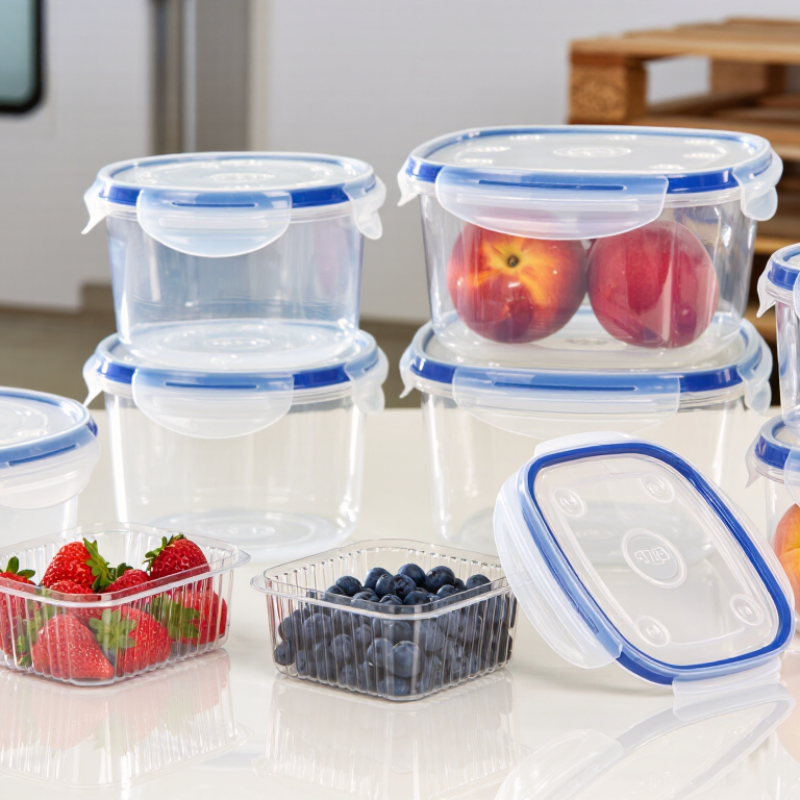
Plastic fruit containers are lightweight packages designed to protect fresh produce during handling, storage, transport, and retail display. They are commonly made from food-grade plastic, such as PET or polypropylene. Their clear walls help buyers inspect color, size, and visible damage without opening the package.

Many containers include ventilation holes that release heat and moisture. This detail matters because trapped condensation can soften berries and encourage mold growth. Clamshells suit strawberries, blueberries, grapes, and small stone fruits. Larger trays may hold peaches, apples, or sliced fruit. A secure lid reduces crushing when containers are stacked, but excessive pressure can still damage delicate produce.

On a packing line, workers usually check the fruit first, then select a container with suitable depth and airflow. Rough edges, weak hinges, or loose lids can create problems during delivery. Clean, dry containers are essential for safe handling. Reusable designs may reduce waste, yet they require proper washing and inspection between uses. Recycling also depends on local collection systems, so a recyclable symbol does not guarantee recovery. In practice, no container is perfect. A package that looks strong in a warehouse may crack in cold weather. Moisture control is often overlooked. Testing containers with real fruit, realistic stacking, and ordinary transport conditions gives more reliable results than choosing by appearance alone.

How to Evaluate China’s Plastic Fruit Container Suppliers

How to Evaluate China’s Plastic Fruit Container Suppliers

Evaluating China’s plastic fruit container suppliers requires more than comparing online prices. Check the plastic type, wall thickness, lid fit, ventilation holes, and weight tolerance. For fresh fruit, food-contact documentation and migration test reports matter. Ask whether these documents cover the exact material and container model. Generic certificates are not enough.

Request samples before discussing large orders. Place peaches, berries, or grapes inside them. Shake the packed containers gently and inspect cracks, sharp edges, condensation, and stacking stability. Measure the internal size yourself. A supplier may describe a container as “standard,” but dimensions can vary slightly. That small difference may damage delicate produce.

A factory audit can reveal useful details. Review molding equipment, quality checkpoints, warehouse cleanliness, and production records. Ask about rejected units and corrective actions. Reliable suppliers should explain their process clearly, not only promise perfect quality.

Confirm mold ownership, minimum order quantity, lead time, export packing, and replacement terms in writing. I would also test communication speed during sampling. Slow replies often become serious delays later.

Still, no checklist is perfect. A polished factory can miss one weak batch, so keep inspection records and approve a pre-shipment sample.

Pricing deserves caution too. The cheapest quote may exclude testing, inner cartons, or stronger packaging. Ask for a complete cost breakdown before making a decision.

Profiles of China’s Top 10 Plastic Fruit Container Suppliers

China’s top ten plastic fruit container suppliers are best assessed by material quality, tooling control, food-contact documentation, and delivery reliability. The ranking below reflects practical sourcing factors, not advertising claims. Grand View Research reported that the global plastic packaging market reached about USD 438.91 billion in 2023, showing strong demand for scalable packaging solutions.

Supplier One focuses on clear PET clamshells for berries. Supplier Two produces ventilated PP trays for peaches and plums. Supplier Three offers recycled-content containers with strict batch testing. Supplier Four specializes in stackable export cartons. Supplier Five develops lightweight designs that reduce resin use. Supplier Six supports custom molds and short pilot runs. Supplier Seven supplies lidded containers for supermarkets. Supplier Eight combines paper sleeves with recyclable plastic bases. Supplier Nine serves cold-chain shipments with stronger corner structures. Supplier Ten provides high-volume injection molding for standardized formats. Details matter.

FAO data estimates that about 14% of food is lost between harvest and retail. Proper ventilation, cushioning, and moisture control can reduce avoidable damage, although packaging alone cannot solve poor logistics. A supplier should provide migration test reports, resin traceability, dimensional tolerances, and factory inspection records. These checks reflect experience, not just catalog promises. Some suppliers still overstate recycled content or underestimate mold maintenance costs. Buyers should verify both claims. A sample may look perfect, yet fail after vibration, stacking, or refrigeration. That uncomfortable gap deserves more attention.

Materials, Designs, Sizes, and Customization Options

China’s top plastic fruit container suppliers usually offer PET, PP, rPET, and compostable polymer options. PET gives clear visibility and strong impact resistance. PP tolerates warmer filling and repeated handling better. rPET can reduce virgin plastic use, but clarity and food-contact documentation require careful checking.

The FAO reported that 13.2% of food is lost between harvest and retail in 2022. Well-designed containers cannot solve every loss, but ventilation, drainage, and cushioning can slow bruising and moisture buildup. Common formats include hinged clamshells, two-piece trays, and lidded punnets. Popular sizes range from 125 grams for berries to 1 kilogram for grapes or cut fruit. Custom options include lid vents, anti-fog treatment, embossed logos, color matching, stacking ribs, and barcode areas. In practical supplier reviews, I check wall thickness beside the hinge, because weak hinges often fail before the container body.

A perfect container rarely exists. More plastic may improve strength, yet increase material use. Less material may lower cost, but create cracking during transport. Smithers identifies convenience and sustainability as major fresh produce packaging trends through 2028. That makes testing essential, not optional.

Tips: Request samples in three sizes. Test them with real fruit, cold storage, vibration, and condensation. Ask for resin specifications, migration reports, recycled-content evidence, and tooling costs. A supplier’s sample may look excellent, but the production batch can still disappoint.

Quality Standards, Pricing, Minimum Orders, and Export Services

China’s top 10 plastic fruit container suppliers should be judged by evidence, not attractive catalogs. Compare material clarity, hinge strength, ventilation, and sealing consistency. Food-contact containers should include current testing documents for the intended market. Ask for resin details, production photos, inspection records, and sample approval procedures. Small defects matter. A loose lid can damage fruit during a long shipment.

Pricing depends on plastic type, size, mold design, printing, and order volume. Standard containers may cost about $0.08 to $0.60 per unit. Custom molds require separate tooling fees. Typical minimum orders range from 5,000 to 20,000 units. Custom production may require 20,000 to 50,000 units. Always request a landed-cost estimate. The cheapest quote may exclude packaging, port charges, or inspection fees.

Reliable suppliers should explain export packing, carton strength, pallet options, and shipment scheduling. They should also provide pre-shipment inspection support and clear replacement terms for defective goods. Check whether the factory can handle mixed sizes without slowing production. Communication quality is another practical signal. Slow answers often create expensive mistakes later. Still, no supplier is perfect. Samples can pass while mass production changes slightly. Keep approved samples, written specifications, and random inspections in the purchasing file. This protects quality better than promises.

China Top 10 Plastic Fruit Container Suppliers? Quality Standards, Pricing, Minimum Orders, and Export Services — Anonymous Supplier Comparison
Rank Anonymous Supplier Profile Typical Container Types Common Materials Typical Size Range Quality and Food-Contact Standards Indicative Export Price* Typical MOQ Standard Lead Time Export Services Best Fit
1 Supplier Profile 01
High-volume thermoforming capability
Clamshells Hinged boxes Ventilated trays Food-grade PET, rPET options, PP 125–1,000 ml; custom dimensions available GB 4806.7 food-contact option; EU food-contact option; FDA food-contact option; batch traceability commonly available $0.035–$0.18 per piece 30,000–100,000 pieces 18–30 days after artwork and deposit approval OEM tooling, barcode and label application, carton optimization, pre-shipment inspection, sea and air freight coordination Supermarkets, wholesalers, and large produce packers
2 Supplier Profile 02
Custom mold and private-label packaging focus
Berry punnets Strawberry boxes Stackable containers PET, rPET, PP 125–750 ml; vent patterns customizable GB 4806.7 option; EU 10/2011 material documentation option; migration-test reports available by project $0.04–$0.22 per piece 20,000–80,000 pieces 20–35 days for standard items; 35–55 days for new molds Design support, mold development, sample approval, export carton marking, commercial invoice and packing-list support Fresh berries and premium retail packaging
3 Supplier Profile 03
Cost-efficient standard product range
Fruit trays Lidded boxes Produce inserts Clear PET, PP, food-grade PS where permitted 250–2,000 ml Food-contact declaration; GB 4806.7 option; routine dimensional and visual inspection $0.025–$0.14 per piece 50,000–150,000 pieces 15–25 days for stock molds Mixed-SKU loading, neutral packaging, container loading plans, sample dispatch, export documentation Value-oriented distributors and seasonal programs
4 Supplier Profile 04
Recycled-content packaging specialist
rPET clamshells Recyclable trays Lids Post-consumer rPET, virgin PET, PP 250–1,500 ml Recycled-content documentation by batch; food-contact suitability depends on material grade and destination-market rules; EU and FDA options may be available $0.045–$0.24 per piece 30,000–100,000 pieces 25–40 days Recycled-content declarations, sustainability data sheets, palletization plans, export consolidation, inspection coordination Retailers with recycled-content targets
5 Supplier Profile 05
Small and medium customized order capability
Mini clamshells Grape boxes Cherry containers PET, PP, PLA options for selected applications 100–750 ml Food-contact material declarations; factory quality records; destination-market testing arranged when required $0.04–$0.20 per piece 10,000–50,000 pieces 20–35 days Low-volume sampling, artwork adjustment, prototype tooling, mixed carton packing, courier and air-freight support Specialty fruit brands and trial-market launches
6 Supplier Profile 06
Heavy-duty transport packaging producer
Rigid produce boxes Stackable trays Reusable totes PP, HDPE, PET 500–5,000 ml; reusable formats available Food-contact PP and HDPE options; load-bearing and stacking tests commonly offered; ISO 9001-style quality systems may be available $0.12–$1.20 per piece 5,000–30,000 pieces 25–45 days Drop and stacking tests, pallet design, returnable-packaging consultation, export packing, container utilization planning Long-distance shipping and reusable supply chains
7 Supplier Profile 07
Ventilation and freshness-oriented packaging
Air-flow clamshells Perforated trays Moisture-control boxes PET, PP, rPET 250–1,250 ml Food-contact declarations; vent-hole dimensional checks; migration and odor testing available depending on destination $0.045–$0.26 per piece 25,000–100,000 pieces 20–35 days Vent-pattern customization, pre-cooling compatibility review, sample testing, export labeling, freight coordination Berries, cherries, grapes, and moisture-sensitive fruit
8 Supplier Profile 08
Premium presentation and gift-packaging capability
Clear gift boxes Multi-compartment packs Display trays Clear PET, PP, laminated paperboard combinations 250–2,500 ml Food-contact plastic options; print-ink and adhesive compliance should be confirmed for each market; pre-production approval process $0.10–$0.80 per piece 10,000–50,000 pieces 30–50 days Structural design, insert development, printing coordination, gift-set assembly, export packaging and inspection Premium fruit, holiday, and promotional programs
9 Supplier Profile 09
Fast replenishment and stock-item supplier
Standard clamshells Produce cups Simple lids PET, PP 125–1,000 ml Standard food-contact declarations; incoming-material inspection; basic dimensional and sealing checks $0.03–$0.16 per piece 10,000–50,000 pieces for stock designs 10–20 days for stock items; 20–30 days for customization Quick samples, stock inventory checks, mixed-SKU orders, carton labeling, express and sea-freight arrangements Urgent replenishment and standard-size purchasing
10 Supplier Profile 10
Integrated sourcing and export coordination
Clamshells Trays Punnets Custom packs PET, rPET, PP, selected biodegradable materials 100–3,000 ml Material compliance documents arranged according to destination market; third-party testing can be coordinated; batch records available by order $0.035–$0.65 per piece 20,000–100,000 pieces 20–40 days Supplier coordination, tooling management, quality inspection, consolidation, export customs support, sea and air freight booking Importers seeking one-stop sourcing support
Pricing and compliance note: The prices, MOQs, and lead times shown are indicative China market ranges for export-oriented plastic fruit containers, not verified quotations from named companies. Actual figures vary according to resin grade, recycled content, container size, mold requirements, printing, order volume, Incoterms, testing requirements, and destination-country regulations. Buyers should request current samples, food-contact declarations, migration-test reports, and pre-shipment inspection records before placing an order.