888-395-5000

Top Clear Clamshell Containers Manufacturers in China

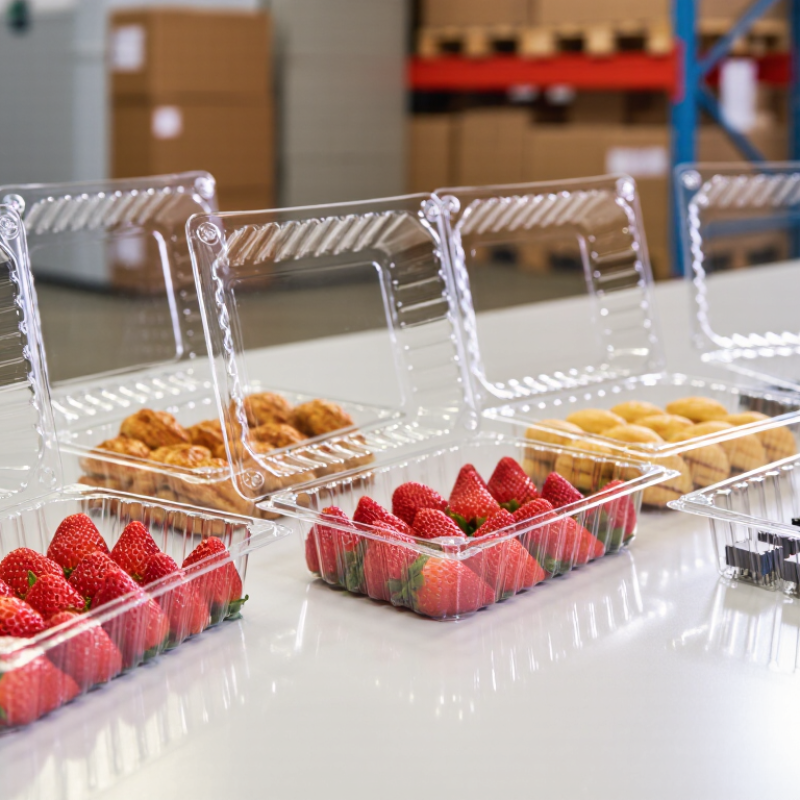
Clear clamshell containers are chosen for a simple reason: customers can see the product before opening the package. In a shop, that clear lid can show fresh berries, neatly arranged pastries, or small electronic parts at a glance. Yet visibility is only one part of a good package. Fit, hinge strength, sealing options, material consistency, and shipping performance matter just as much.

Packaging researcher Dr. Susan Selke’s work highlights an important trade-off: packaging decisions must balance product protection, material use, and end-of-life considerations. This is a paraphrase of her research, not a direct quotation. It is a useful lens when comparing manufacturers in China. A supplier’s catalog may look impressive, but buyers should also ask for samples, dimensional specifications, material details, and quality-control information. Small differences matter. A lid that opens during transit can turn a polished retail display into a messy carton.

This guide introduces clear clamshell containers manufacturers in China and the practical questions worth asking before requesting a quotation. It considers product range, customization, communication, and evidence of production capability. No supplier is automatically the right fit for every order. That part takes careful checking—and sometimes a second look at the sample.
Top Clear Clamshell Containers Manufacturers in China

What Clear Clamshell Containers Are and How They Are Used

Clear clamshell containers are one-piece packages with a hinged lid that folds over a shaped base. Their transparent walls let customers inspect products without opening the package. Common materials include PET and PP, though the right choice depends on the product and intended use. Some designs close with snap-fit edges; others use tabs or a separate seal. Simple, but practical.

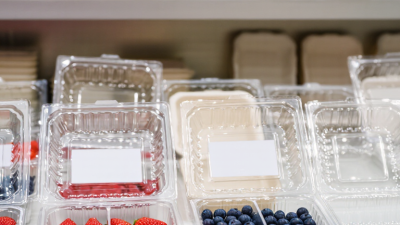
These containers hold items such as berries, pastries, small electronics, and hardware. A berry pack may include ventilation holes, while a pastry container needs enough height to protect its topping. For food, check the material and intended use against the supplier’s specifications. Manufacturers can adjust the dimensions, wall thickness, hinge, and closure to suit a product.

Samples should be tested with the actual contents; a lid that looks secure may still pop open during handling. Clear packaging also reveals scuffs, fingerprints, and uneven contents, which can be a drawback.

Before ordering, compare fit, visibility, closure strength, and stacking performance. Recycling options vary by material and location, so avoid assuming every clear container belongs in a curbside bin.

Materials and Manufacturing Methods for Clear Clamshell Packaging

Clear clamshells are commonly made from PET, recycled PET, or polypropylene. PET sheet is extruded, heated, and shaped in a thermoforming mold. The process can create a transparent lid, formed cavities, and an attached hinge. Polypropylene suits flexible hinges, though it may not match PET’s glass-like clarity. Material choice affects stiffness, impact resistance, seal quality, and appearance.

PlasticsEurope’s Plastics—The Fast Facts 2023 reports 400.3 million tonnes of global plastics production in 2022. That figure covers many applications, not clamshells alone, but it highlights why material efficiency matters. In production, manufacturers control sheet thickness, heating, mold temperature, and cooling. Small details matter. Uneven heating can leave cloudy patches or weak corners; overly thin edges may split during packing. Recycled PET can reduce reliance on virgin resin, but color and clarity may vary by feedstock. That trade-off is easy to underestimate. Buyers should request samples and check hinge performance, transparency, and cavity fit under real packing conditions. A clear package is not automatically a recyclable one; local collection and sorting systems also affect its end-of-life route.

Top Clear Clamshell Containers Manufacturers in China - Materials and Manufacturing Methods for Clear Clamshell Packaging

Material and manufacturing-process comparison for clear clamshell packaging produced by manufacturers in China

Material Typical Forming Method Appearance and Properties Common Applications Key Manufacturing Considerations
APET (Amorphous PET) Sheet extrusion followed by vacuum or pressure thermoforming; trim and punch operations finish the package. High transparency and gloss. Provides a relatively rigid package and is commonly used where product visibility is important. Produce, bakery items, small consumer goods, electronics accessories and retail display packaging. Forming temperature, sheet thickness and mold design affect clarity, wall distribution and dimensional consistency. Recycling acceptance depends on local collection and sorting systems.
rPET (Recycled PET) Recycled PET is processed into sheet and then thermoformed using vacuum or pressure forming. Can provide clear packaging, although color and clarity may vary with recycled feedstock and formulation. Food and non-food retail packaging, subject to the material grade and applicable food-contact requirements. Recycled content and food-contact suitability must be specified and verified for the intended market. Sheet quality and drying control are important during processing.
PVC (Polyvinyl Chloride) Sheet extrusion followed by thermoforming, commonly with vacuum forming and mechanical trimming. Can be clear and readily formed into display-style packs. Formulations can differ in flexibility and impact performance. Retail display packaging and selected non-food applications. Confirm the intended application and local regulatory requirements. PVC recycling is less widely available than PET recycling in many collection systems.
PP (Polypropylene) Sheet extrusion and thermoforming; injection molding is also used for some rigid container designs. Lightweight and comparatively flexible, with good resistance to many chemicals. Clear grades are available, but clarity varies by grade and design. Food containers, hinged packs and applications requiring greater flexibility or heat resistance than some clear PET designs. Material grade and forming conditions influence transparency, hinge performance and stiffness. Check the specified grade for food-contact use and temperature limits.
HIPS (High-Impact Polystyrene) Sheet extrusion followed by thermoforming. Offers impact-modified toughness, but is generally less optically clear than APET or clear PVC. Packaging where toughness or an opaque/colored appearance is more important than maximum transparency. Often selected for formed trays and inserts rather than high-clarity display clamshells. Confirm that its appearance meets the product-display requirement.

Selection note: Actual clarity, strength, recyclability and food-contact suitability depend on the specific resin grade, recycled-content level, package design and destination-market requirements. Ask suppliers for material specifications and relevant compliance documentation.

Key Factors Shaping China’s Clamshell Container Industry

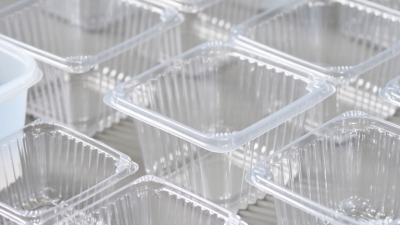
China’s clear clamshell container industry is shaped by material costs, production capability, and changing retail needs. Many manufacturers use thermoforming, where heated plastic is shaped against a mold. The mold determines details such as hinge strength, stacking fit, and how easily a shopper can open the pack. Small details matter.

Material choice involves trade-offs. PET offers clear product visibility, while recycled-content options can vary in color and consistency. Buyers should check samples under actual store lighting, not only in a factory office. A lid that looks clear on a desk may show scratches or haze on a bright shelf. This is easy to overlook.

Automation and quality checks also influence supplier performance. Stable heating and trimming help keep edges even and closures secure across production runs. Still, a polished sample does not guarantee identical results at scale. Ask manufacturers how they inspect dimensions, test hinges, and manage changes between material batches. Packaging design must also suit local recycling systems, which differ by region. A practical design may need compromise: lighter packaging can reduce material use, but overly thin walls may buckle during transport.

Leading Clear Clamshell Container Manufacturers in China

Leading clear clamshell container manufacturers in China are evaluated by more than appearance. A clear lid should close evenly, stay attached at the hinge, and let customers see the product without distracting haze. Buyers can compare suppliers by asking about material options, mold consistency, production capacity, and inspection procedures. Ask for recent samples. Small details matter.

A useful review includes checking the lid’s fit across several units, not just one polished sample. Look for sharp edges, cloudy areas, weak hinges, and uneven locking tabs. Request measurements and test samples with the actual product; weight and shape can affect how securely a container closes. A glossy sample alone proves little. I would also ask how defects are recorded and what happens when a batch falls outside the agreed specifications. A supplier’s clear, documented answers are more helpful than broad promises.

Tips: Share your product dimensions and packing process before requesting a quote. Compare samples under ordinary store lighting, and confirm that the selected material suits the intended use. Allow time for revisions; even a small change to the hinge can affect handling.

How to Evaluate Chinese Clamshell Container Suppliers

When evaluating Chinese clamshell container suppliers, look beyond polished samples. Request drawings with dimensions, material specifications, and the agreed thickness range. Measure several points on a sample; thin corners can split during packing. Ask how the supplier controls mold temperature, cycle time, and batch consistency. Small details matter.

Check the hinge with repeated opening and closing, then inspect for whitening, cracks, or uneven edges. Request recent quality records, traceable batch codes, and test reports relevant to your product and destination market. Confirm the supplier can reproduce the approved sample at your expected order volume. A factory visit can reveal storage conditions and scrap handling, but a staged visit is not proof of everyday performance. Verify claims against dated production records.

Environmental claims deserve careful checking. The OECD’s 2022 Global Plastics Outlook reports that packaging accounted for about 40% of global plastic waste in 2019, while only 9% of plastic waste was recycled. Ask suppliers to document resin composition, recycled-content claims, and material sourcing. Do not treat a recycling symbol as evidence of recyclability in your market. A clear container may look identical across samples, yet perform differently after stacking or transport. That uncertainty is worth discussing openly before signing specifications.

How to Evaluate Clear Clamshell Container Suppliers

Suggested weighting for a buyer’s supplier assessment scorecard

These percentages are suggested scorecard weights, not measured industry statistics or ratings of specific suppliers. Adjust them to match your product, destination-market requirements, and purchasing priorities. Verify food-contact compliance for the intended market and application.