Top Concrete Batch Systems for 2026 What Buyers Need to Know
In 2026, the construction industry will depend heavily on advanced Concrete Batch Systems. These systems play a crucial role in ensuring the efficiency and quality of concrete production. With rapid technological advances, buyers need to stay updated on the latest features and capabilities.
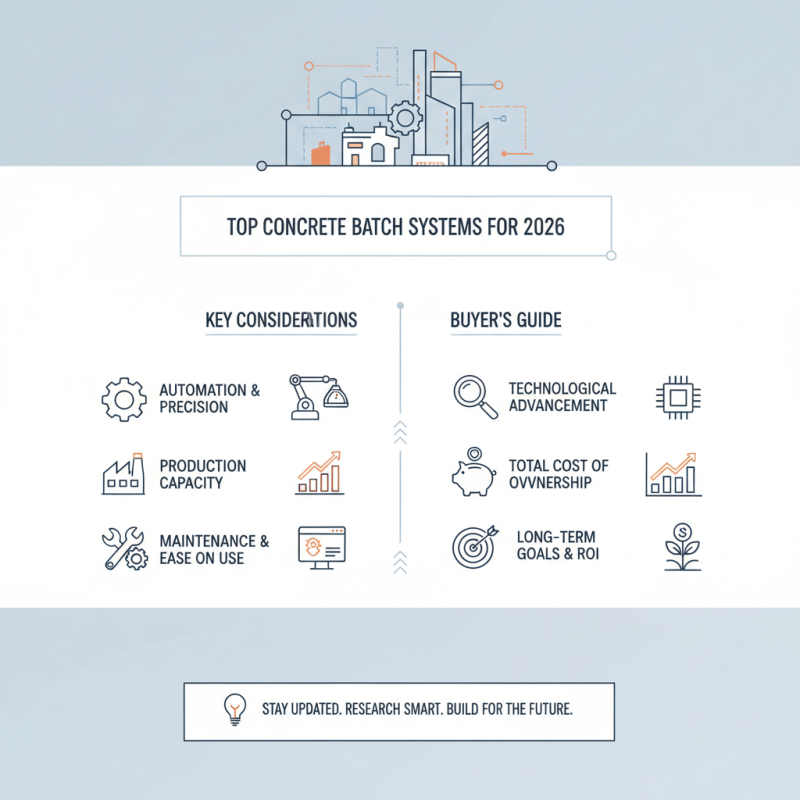
Concrete Batch Systems are not just about mixing materials. They encompass automation, precision, and integration with other construction technologies. Buyers should pay attention to aspects such as production capacity, ease of use, and maintenance requirements. A system that appears robust today may become obsolete tomorrow. This rapidly changing landscape requires ongoing assessment.
Investing in the right Concrete Batch System can enhance operational efficiency. However, it's vital to consider the total cost of ownership. Some systems seem affordable initially but may incur high maintenance costs down the road. Conducting thorough research can help buyers make informed decisions, ensuring they select a system that aligns with their long-term goals.
Key Features to Consider in Concrete Batch Systems for 2026
As we approach 2026, concrete batch systems are evolving rapidly. Buyers should focus on key features that enhance efficiency and quality. Emphasizing automation, many systems now offer advanced control mechanisms. These features allow for precise measurements, reducing material waste. According to a recent industry report, automation can increase output by 20% while lowering operational costs by 15%. This is essential for staying competitive in a challenging market.
Regular data monitoring is crucial for quality assurance. Systems equipped with real-time analytics can identify inconsistencies early. This proactive approach minimizes costly errors in productivity and ensures that mixes adhere to specifications. Reports indicate that 30% of quality issues stem from data inaccuracies, highlighting the need for reliable systems.
**Tip**: Always prioritize systems with user-friendly interfaces. Operators will make fewer mistakes with intuitive controls.
Consider energy efficiency as a vital attribute. Reduced energy consumption not only lowers costs but also meets sustainability goals. Many new systems feature eco-friendly technologies that can decrease energy use by 10-15%. However, be wary of overly complex systems. They may require extensive training, leading to potential downtime. Balancing innovation with simplicity is key for successful operations.
Top Concrete Batch Systems for 2026
| Feature | Description | Importance | Example Metrics |
| Automation Level | Degree of automation in mix design and batching processes. | High | 80-100% automation |
| Mixing Technology | Type of mixing technology utilized, such as twin-shaft or planetary mixers. | Medium | Cycle time: 30-60 seconds |
| Control System | User interface and software capabilities for operating the batch system. | High | Touchscreen, remote access |
| Capacity | Maximum output capacity measured in cubic yards or cubic meters per hour. | High | 50-120 m³/hr |
| Energy Efficiency | Efficiency of energy consumption related to production output. | Medium | Energy usage: < 1.5 kWh/m³ |
| Maintenance Requirements | Frequency and ease of required maintenance activities. | High | Preventive maintenance every 1000 hours |
Comparison of Leading Concrete Batch Systems in the Market
When exploring concrete batch systems, buyers must consider various factors crucial for their operations. These systems cater to diverse needs, from small-scale construction to large infrastructure projects. Each system offers unique features that can significantly impact productivity, efficiency, and cost-effectiveness.
A key aspect to evaluate is automation. More sophisticated systems allow for greater control over mix designs and reduce human error. However, these advanced features often come at a higher initial cost. Users must weigh whether the long-term benefits justify the investment. Additionally, compatibility with existing machinery is vital to seamless integration, which can be overlooked during the purchasing process.
Another essential element is the level of customer support. Reliable manufacturers typically provide technical assistance and training for operators. Yet, experiences can vary. Some buyers might encounter challenges with responsiveness or product maintenance. It's crucial to gather testimonials or reviews from current users to gain insight into the long-term reliability of the chosen system. This approach not only aids in making an informed decision but also highlights potential pitfalls to avoid in the investment process.
Cost Analysis: Budgeting for Your Concrete Batch System Purchase
Purchasing a concrete batch system can be a substantial investment. Buyers must understand the costs involved. According to a recent industry report, the average price for a high-capacity concrete batch system ranges from $300,000 to $500,000. This broad range reflects variations in technology, automation, and production capacity. Cost factors such as installation, training, and ongoing maintenance must be considered.
In addition to the initial purchase cost, operating expenses are crucial. Energy consumption can fluctuate significantly based on system design and usage patterns. A well-optimized system can reduce energy costs by up to 30%. However, some buyers underestimate these operational costs. The maintenance of equipment can also impact budgets. Regular upkeep is essential to ensure efficiency and prolong lifespan, contributing to long-term savings.
Buyers should also evaluate potential financing options. Leasing can be a more manageable way to get the needed equipment without upfront capital. However, lease terms can affect total costs over time. Prospective buyers need to realistically assess their budget, including both immediate and hidden costs. Understanding these factors is critical for a successful purchase.
Cost Analysis of Concrete Batch Systems for 2026
Future Trends in Concrete Batch Technology and Innovation
The concrete batch industry is evolving rapidly, driven by technological advancements. According to a recent report by the Global Ready-Mix Concrete Market, the demand for innovative batch systems is projected to grow by 5.5% annually until 2026. New technologies are enhancing automation, improving precision, and ensuring better material quality.
One key trend is utilizing artificial intelligence in batching processes. AI can optimize mixture designs and predict maintenance needs. This reduces downtime and increases productivity. However, the initial setup costs and learning curve may deter some companies. Implementing AI also requires skilled personnel, creating a demand-supply gap in the workforce.
Sustainability is another focus area. The industry is exploring eco-friendly materials and reducing waste. Reports indicate that companies adopting green practices see around a 20% reduction in operational costs. Yet, transitioning to greener solutions presents challenges. Balancing cost, availability, and technology can be complex. As the market expands, companies must weigh the benefits against these obstacles.
User Reviews and Feedback: What Buyers Are Saying in 2026
As we delve into user reviews and feedback on concrete batch systems in 2026, a common theme emerges. Many users appreciate the enhanced automation and efficiency these systems provide. However, some express concerns about the complexity of settings and adjustments. With advanced technology, there is often a learning curve. Operators may feel overwhelmed at first, especially those new to automatic batching.
Reliability shines through in many reviews. Buyers frequently note that consistent performance leads to improved project outcomes. Yet, despite these advantages, some users highlight issues with initial setup and troubleshooting. Technical support can vary significantly. Users have shared experiences of long wait times for assistance, which can delay progress on critical projects.
Moreover, environmental considerations are also notable. Consumers are increasingly looking for sustainable options. Feedback indicates a strong desire for systems that minimize waste and optimize materials. Some buyers mention their disappointment with systems that do not meet eco-friendly standards. This feedback shows a growing awareness of sustainability in the construction industry, calling for manufacturers to address these concerns swiftly.
