Why Choose an Automatic Bag Feeding Machine?
Why Choose an Automatic Bag Feeding Machine?
An Automatic Bag Feeding Machine can transform a repetitive packaging task into a controlled, measurable process. It separates, opens, and presents bags for filling with steady timing. Operators spend less time handling empty bags by hand. They can focus on quality checks, material supply, and safe machine operation instead.
Packaging automation specialist Tom Egan offers a useful reminder: “The best automation fits the process, not the other way around.” That principle matters on a real production floor. A machine must match bag dimensions, film thickness, product weight, and line speed. A narrow pouch may wrinkle during opening. A dusty environment may affect sensors. Small details can decide whether automation succeeds.
The strongest reason to choose an Automatic Bag Feeding Machine is consistency. Each bag should arrive in the same position, at the same moment, with minimal damage. This can reduce feeding errors, improve output stability, and support cleaner work areas. It may also lower physical strain caused by repeated manual movements.
Still, automation is not a magic fix. Poorly prepared bags, weak maintenance, or incorrect settings can create new stoppages. Staff need practical training, not only a quick demonstration. The right system should offer accessible controls, reliable sensors, simple changeovers, and measurable performance data. Before purchase, manufacturers should test actual bags and products. That step is sometimes skipped. It should not be.
Automatic Bag Feeding Machines: Functions, Components, and OEE Metrics
Why Choose an Automatic Bag Feeding Machine?
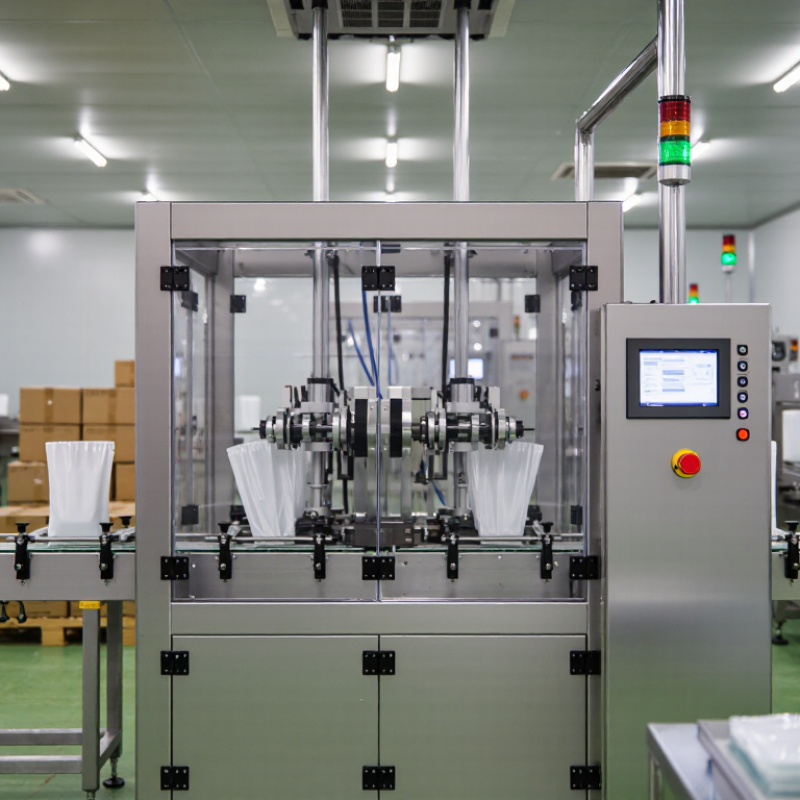
An automatic bag feeding machine separates, opens, and presents empty bags for filling. Its feeder magazine stores a controlled stack, while vacuum cups or grippers pick each bag. Sensors confirm position before the filling cycle begins. Servo drives regulate speed, and pneumatic cylinders manage opening and transfer movements. These details reduce manual handling and improve repeatability. However, dusty bags can weaken suction performance. That practical limitation deserves attention.
OEE measures machine effectiveness through availability, performance, and quality. ISO 22400 provides a recognized framework for manufacturing performance indicators. The OEE Foundation commonly cites 85% as a world-class reference, but it is not a universal target. A 2024 Deloitte Smart Manufacturing and Operations Survey reported that 86% of manufacturers viewed smart operations as important for competitiveness. Automatic feeding supports this goal by recording stops, missed picks, and cycle delays.
The most useful components are not always the fastest ones. A reliable system needs a stable magazine, adjustable guides, bag-presence sensors, and accessible changeover controls. Operators should review availability losses separately from quality losses. Otherwise, the dashboard may hide recurring feeding faults. In real production, a slower machine with fewer interruptions can outperform a faster machine. Data shows the difference. Experience explains why.
Labor Efficiency: Measure Bags per Operator Hour and Automation ROI
Why Choose an Automatic Bag Feeding Machine?
Labor efficiency becomes clearer when measured, not guessed. In a busy packing line, record bags loaded per operator hour before installing automation. For example, one operator may manually feed 1,200 bags during an eight-hour shift. That number can fall sharply during changeovers, short breaks, or jam removal. Track those interruptions carefully. They often explain the real gap between planned and actual output.
An automatic bag feeding machine can keep bags positioned and supplied at a steadier rate. Measure good bags per operator hour, not only total bags handled. Also record rejected bags, stoppage minutes, and the number of operators assigned to the line. A simple ROI calculation compares labor savings and added output with equipment, training, maintenance, and energy costs. Use results from several shifts. One shift is not enough.
Our first trial looked impressive, but we counted machine speed too early. The operator still spent time correcting poorly stacked bags. That reduced the expected return. After adjusting the loading method, the line produced more consistent results with less manual feeding. This experience shows why reliable measurement needs both production data and operator feedback. Numbers help, but they do not explain everything.
Safety and Integration: Apply OSHA Guidance and ISO 13849-1 Standards
Why Choose an Automatic Bag Feeding Machine?
An automatic bag feeding machine can reduce repetitive hand movements around open packaging areas. Yet automation does not remove risk. It relocates risk to conveyors, grippers, pneumatic devices, and access doors. OSHA’s FY2023 Top 10 report recorded 1,644 machine-guarding violations. That figure deserves attention during equipment selection, not after installation. A safer design uses fixed guards, interlocked doors, emergency stops, and clear lockout points. Operators should never reach through a guard to correct a misaligned bag.
ISO 13849-1 provides a structured method for safety-related control systems. Designers assess the required Performance Level, then verify architecture, diagnostic coverage, and component reliability. For example, a door switch should stop motion before a hand can reach the sealing or feeding zone. The risk assessment must consider speed, access frequency, stopping distance, and foreseeable misuse. Small details matter. A slow stop may still be unsafe.
BLS reported 5,283 fatal work injuries in the United States during 2023. This broad figure does not measure bag-feeding equipment directly, but it reinforces the need for disciplined safeguards. In commissioning work, teams should test every stop circuit under realistic conditions, including an empty bag, a jam, and a power restart. Documentation is often weaker than the hardware. That is a problem. Training, inspection records, and periodic validation should match the machine’s actual behavior, not an ideal drawing.
Why Choose an Automatic Bag Feeding Machine?
Safety and Integration: OSHA Guidance and ISO 13849-1
ISO 13849-1 defines five Performance Levels (PL a–e) using the probability of dangerous failure per hour (PFHd). Higher levels represent lower PFHd ranges and may be required for safety functions such as guarded access, emergency stops, and bag-feeding motion control. The required level must be determined through a machine-specific risk assessment and validation.
For an automatic bag feeding machine, integration should also address OSHA machine guarding requirements under 29 CFR 1910.212 and hazardous-energy control under 29 CFR 1910.147. The chart is a standards-based reference, not a compliance rating.
