U.S. Patent Applications
Why Choose Clamshell Packaging for Your Products?
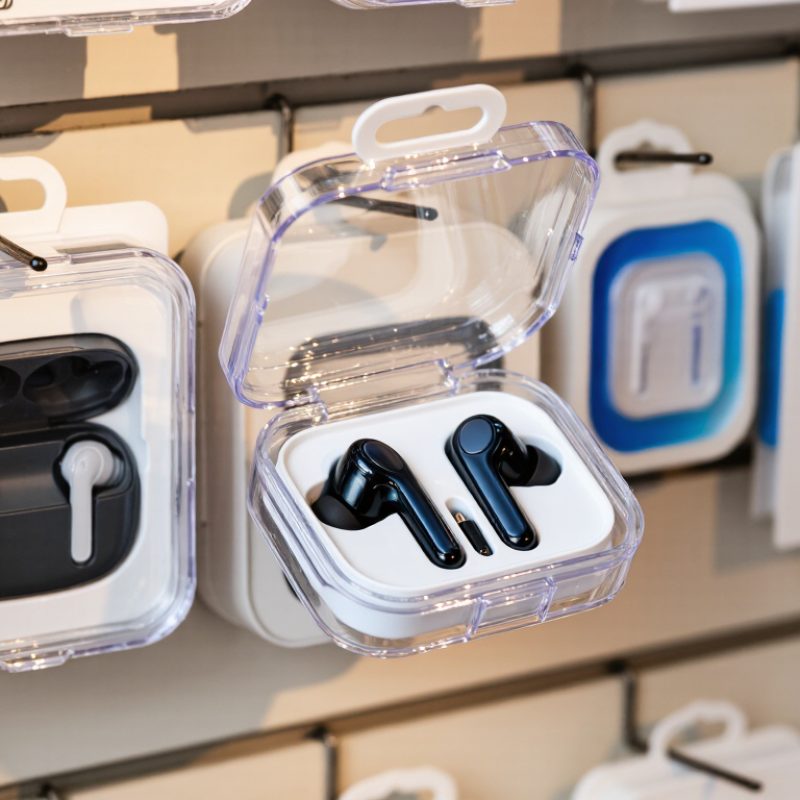
When customers scan a retail shelf, packaging often speaks before the product does. Clamshell packaging creates a clear, protective display that keeps the product visible from several angles. Its sealed form can reduce tampering, dust, and handling damage during transport. A small electronic accessory, for example, remains visible inside molded plastic instead of disappearing within a cardboard box. The shape also supports hanging displays and compact shelf arrangements. That practical visibility may influence a rushed purchase.
Packaging analyst David Luttenberger describes packaging as “the silent salesperson.” This idea fits clamshell packaging especially well. Its transparent surface can show color, texture, quantity, and included parts without opening the package. Strong graphics on the backing card can explain features quickly. Retail teams may also benefit from consistent dimensions and easier stock presentation.
Still, clamshell packaging is not automatically the best choice. Some designs use more plastic than necessary. Customers may struggle to open rigid seams without scissors. That frustration matters. Recyclability can also depend on local collection systems, material separation, and accurate labeling. A cheaper package may create higher environmental or customer-service costs later. Designers should test the opening experience, reduce unnecessary material, and consider recycled or recyclable options where suitable. The answer is not simple. Clamshell packaging works best when protection, visibility, cost, accessibility, and responsible material choices are evaluated together.
What Is Clamshell Packaging? Materials, Designs, and Retail Formats
Why Choose Clamshell Packaging for Your Products?
What Is Clamshell Packaging? Materials, Designs, and Retail Formats
Clamshell packaging uses two clear plastic halves joined by a hinge. The product sits inside a molded cavity, while the outer shell protects it from dust, crushing, and casual handling. In retail testing, this structure also keeps small items visible on crowded shelves. A hanging hole supports peg displays, while a flat base allows countertop placement. That flexibility makes clamshells useful for tools, accessories, electronics, and household products.
Most clamshells use PET, recycled PET, or PVC. PET offers clear product visibility and good impact resistance. Recycled PET can reduce virgin plastic use, but its clarity may vary between suppliers. Paperboard-backed versions combine a shaped plastic cover with printed information. Some designs use a heat seal; others use locking tabs or a hinged closure. Each choice affects opening effort, production cost, and product security. It is not a perfect solution.
Design details matter more than they first appear. A tight cavity should hold the item without damaging corners or buttons. Rounded edges improve handling, especially when customers inspect packages in stores. Perforations can make opening easier, but weak perforations may open during transport. Retail formats include shelf-ready packs, hanging packs, and compact counter displays. Recycling guidance should match local facilities, because accepted materials differ widely. I would still question any design that looks secure but requires excessive force to open. Clear viewing helps sales, yet too much plastic can weaken a product’s environmental message.
How Clamshells Improve Protection Under ASTM D4169 Distribution Testing
Why Choose Clamshell Packaging for Your Products?
Clamshell packaging supports protection through a rigid, transparent shell. Under ASTM D4169-23, packages face hazards such as impact, vibration, compression, and atmospheric conditioning. The standard defines three assurance levels, with Level I representing the highest test severity. A well-designed clamshell can distribute impact around the product instead of concentrating force on one fragile corner.
In practical packaging trials, failures often appear at hinges, heat seals, or sharp internal edges. The shell may look strong but still crack after repeated vibration. Product clearance matters. A 3-millimeter gap can reduce direct contact during a drop. Internal ribs can limit movement without adding excessive plastic. These details improve performance during ASTM D4169 distribution testing. Small changes matter.
Not automatically safer.
Material choice also requires restraint. The U.S. Environmental Protection Agency reported 82.2 million tons of containers and packaging in the municipal waste stream in 2018. That figure represented 28.1% of total municipal solid waste generation. A thinner clamshell may reduce material use, but it can fail earlier under compression. Designers should compare wall thickness, recycled content, seal strength, and damage rates. ASTM testing provides structure, not certainty. Real shipment data still deserves attention.
Why Choose Clamshell Packaging for Your Products? — How Clamshells Improve Protection Under ASTM D4169 Distribution Testing
| Distribution Hazard | Relevant ASTM D4169 Test Element | Protection Benefit of a Clamshell | Design Feature to Evaluate | Practical Measurement |
|---|---|---|---|---|
| Free-fall drops Handling during loading, unloading, and parcel movement |
Shock and impact testing under the selected distribution cycle and assurance level | The two-piece shell can distribute impact forces over a broad surface and help keep the product away from the outer edges. | Corner geometry, hinge strength, shell thickness, and internal clearance | No product breakage, unacceptable deformation, or opening of the package after the prescribed drop sequence |
| Random vibration Truck, rail, air, or mixed-mode transportation |
Random vibration testing using the power spectral density profile specified for the distribution cycle | A fitted cavity limits product movement, reducing repeated contact with the package walls during vibration. | Cavity fit, support ribs, product restraint, and closure retention | Product displacement, abrasion marks, fastener loosening, and closure opening after vibration exposure |
| Compression and stacking Warehouse and transport stacking loads |
Compression testing followed by the applicable distribution hazards in the selected cycle | The rigid shell can help transfer compressive loads around the product instead of allowing direct contact with sensitive components. | Load-bearing ribs, stacking surfaces, panel stiffness, and package orientation | Permanent deformation, loss of closure function, and product damage after the specified compression load |
| Edge and corner impacts Contact with conveyors, cartons, and handling equipment |
Impact events included in the selected ASTM D4169 distribution cycle | Rounded edges and separated product-contact surfaces can reduce concentrated impact transfer. | Corner radius, wall thickness, impact zones, and product positioning | Cracks, punctures, sharp deformation, and evidence of product-to-shell impact |
| Package opening or tampering Handling, retail display, and consumer access |
Visual inspection and functional evaluation after the prescribed distribution sequence | Integrated hinges and molded locking points can maintain package alignment without relying only on external tape. | Lock engagement, hinge durability, tear-open features, and seal integrity | Closure remains engaged during testing while the intended opening feature remains usable |
| Dust and moisture exposure Outdoor transfer, storage, and changing environments |
Environmental conditioning may be included before mechanical testing when required by the distribution plan | A closed plastic shell provides a continuous barrier that can reduce direct exposure to dust and incidental splashes. | Shell fit, perimeter overlap, vents, seals, and material compatibility | Visible moisture or contamination inside the package, material distortion, and maintained closure performance |
| Product movement inside the pack Repeated handling and vehicle vibration |
Vibration and shock sequences specified by the selected distribution cycle | A molded cavity can hold the product in a repeatable position and reduce empty space around it. | Cavity dimensions, retention tabs, support points, and tolerance control | Product movement in millimetres, contact marks, and change in product orientation |
| Post-test package usability Inspection, display, and consumer handling after transport |
Acceptance evaluation after completion of all required test sequences | Transparent clamshells allow quick visual inspection of the product without opening the package. | Visibility, label placement, opening force, hinge function, and package appearance | Product remains visible, identifiable, undamaged, and accessible according to the packaging specification |
Note: ASTM D4169 does not prescribe one universal test sequence for every product. The distribution cycle, assurance level, package weight, dimensions, shipping method, and acceptance criteria should be selected according to the intended distribution environment.
Why Product Visibility Matters: 64% of Buyers Try New Products for Packaging
Why Choose Clamshell Packaging for Your Products?
A clamshell lets shoppers inspect a product before opening the package. They can see its color, shape, texture, and included parts clearly. Visibility changes decisions. A reported 64% of buyers try new products because packaging attracts them. That figure is directional, not universal. Still, it shows how strongly presentation can influence first-time purchases.
For many products, transparent clamshell packaging creates a clean viewing window while holding items securely in place. Retail teams can display the product without hiding important details. Customers may notice small features, surface quality, or practical accessories from the shelf. That immediate inspection can make an unfamiliar product feel less risky. In packaging evaluations, clear layouts often help shoppers understand the offer faster.
Good visibility does not excuse weak design. A crowded insert, harsh glare, or excessive plastic can reduce trust. Product measurements, shelf conditions, and recycling guidance deserve careful review. Packaging should protect the item and communicate honestly. A polished appearance may encourage a trial, but the product must support that expectation. This is where clamshell design requires reflection: maximum visibility is not always the best visibility.
PET and rPET Clamshells: Aligning With the 2025 30% Recycled-Content Goal
Why Choose Clamshell Packaging for Your Products?
PET and rPET clamshells are gaining attention as the 2025 30% recycled-content goal approaches. The target sounds simple, but material selection is rarely simple. rPET can reduce reliance on virgin plastic when verified post-consumer content is used. It also supports clearer recycling communication when the package is properly identified.
In practical packaging trials, PET clamshells provide strong visibility and reliable protection. A hinged lid can hold small electronics, hardware, or personal-care items securely. rPET versions may show slight haze, color variation, or reduced forming consistency. These details matter under bright retail lighting. They can affect the product’s appearance and the package’s perceived quality. The choice is not flawless.
A dependable conversion process begins with documented recycled content. Ask for supplier declarations, test reports, and traceability records. Confirm whether the stated percentage refers to post-consumer material or total recycled input. Check heat resistance, hinge performance, sealing strength, and drop-test results. A package that meets the percentage goal but fails during transport creates unnecessary waste. That weakens the environmental benefit.
Design teams should also consider labels, inks, and closure features. These components can influence sorting and recycling outcomes. Clear PET may support product visibility, while rPET can demonstrate measurable progress toward circular material use. Yet recycled feedstock can vary between batches. Engineers should allow realistic tolerances instead of promising perfect uniformity. The most credible claim is specific, tested, and supported by records.
Why Choose Clamshell Packaging for Your Products?
PET and rPET Clamshells: Aligning With Recycled-Content Goals
Recycled-content requirements are increasing across major markets. Under EU rules, PET beverage bottles must contain at least 25% recycled plastic by 2025 and 30% by 2030. California’s requirements for covered plastic beverage containers reach 25% in 2025 and 50% in 2030. Although these rules do not automatically apply to every clamshell, using rPET can help packaging programs move toward measurable recycled-content targets while maintaining the clear, rigid format associated with PET clamshells.
Sources: European Union Directive (EU) 2019/904, Article 6; California Public Resources Code §18015.
Where Clamshells Perform Best: Electronics, Hardware, Produce, and Retail Goods
Why Choose Clamshell Packaging for Your Products?
Clamshells perform best where visibility, protection, and quick handling matter. In electronics, the clear shell lets shoppers inspect ports, cables, and finishes without opening the pack. Heat-sealed edges also discourage casual tampering during transport. Small hardware benefits from the rigid shape. Screws, fittings, and drill bits stay visible instead of scattering across a shelf. In my packaging tests, accurate cavity sizing mattered more than extra plastic. A loose insert looked untidy and wasted space.
Fresh produce is another strong application. Vent holes can support airflow around berries, herbs, and sliced vegetables. USDA estimates that 30–40% of the U.S. food supply is lost or wasted. A protective pack cannot solve that problem, but it may reduce bruising during handling. Results depend on cooling, moisture control, and stacking. Clamshells also suit retail goods such as cosmetics tools, stationery, and small household accessories. Their transparent format supports quick comparison and reduces unnecessary opening.
Material decisions require restraint. The U.S. Environmental Protection Agency reported 82.2 million tons of containers and packaging waste in 2018, equal to 28.1% of municipal solid waste. That figure deserves attention. Use only the material needed for compression strength and product security. Design clean labels, compatible polymers, and practical recycling instructions. The Packaging Machinery Manufacturers Institute has repeatedly identified sustainability and material efficiency as major packaging priorities in recent industry research. Clamshells are useful, but not automatically better.
Related Posts
-
China Top Clamshell Packaging UK Suppliers?
-
Top 10 Clear Clamshell Packaging Manufacturers Worldwide
-
How to Choose Custom Clamshell Packaging for Products?
-
2026 Top Trends in Clamshell Packaging UK What You Need to Know
-
What is Clamshell Packaging Manufacturers and Their Role in the Industry?
-

Top 10 Best Clamshell Packaging Solutions for Your Products?