888-395-5000

Why Choose Pre Printed Barcode Labels for Global Sourcing?

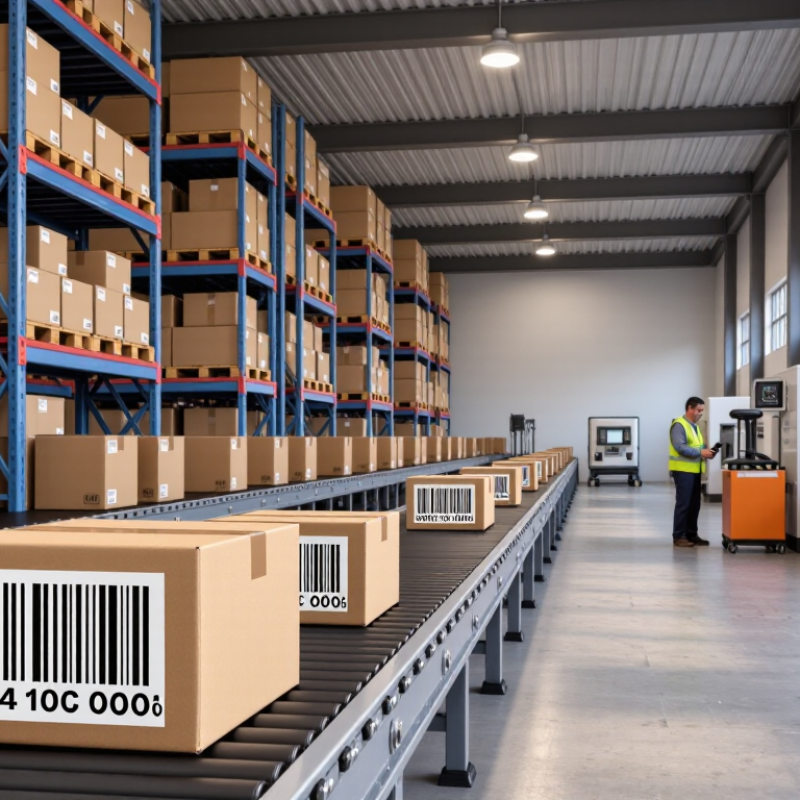
Global sourcing depends on small details that remain reliable across distance, languages, and warehouse systems. A carton may travel from Shenzhen to Rotterdam, then to a regional fulfillment center. Its label must still scan clearly after handling, moisture, and temperature changes. This is where pre printed barcode labels become valuable. They provide consistent symbols, fixed layouts, and readable product information before goods leave the supplier.

GS1’s Sunrise 2027 guidance is accelerating the move toward richer 2D barcodes and stronger product identification. Its standards emphasize accurate data, print quality, and global interoperability. The 2024 Zebra Warehousing Study also reported that 73% of warehouse decision-makers planned to increase technology investment by 2028. Better labels support that investment, especially when scanners, software, and suppliers operate across different regions. Bob Carpenter, former CEO of GS1 US, described the barcode as “a common language for commerce.” That phrase explains the practical value of standardization.

Pre printed barcode labels can reduce relabeling, shorten receiving time, and limit manual keying errors. They also help sourcing teams approve artwork before production begins. A label with a quiet zone, strong contrast, and correct symbology is easier to trust. Small errors remain expensive. One missing digit can delay a container or create inventory confusion.

Still, this choice is not automatic. Variable data, late design changes, and short production runs may favor on-demand printing. Buyers should verify ISO/IEC print quality, GS1 data rules, adhesive performance, and destination requirements. Reports offer direction, not certainty. Real warehouse trials matter more. A barcode that scans well in a laboratory may fail on a dusty carton. That inconvenient detail deserves attention.

Why Choose Pre Printed Barcode Labels for Global Sourcing?

What Are Pre-Printed Barcode Labels?

Pre-printed barcode labels are adhesive labels with barcode data produced before goods reach a warehouse or production site. The printed code may identify a product, carton, batch, location, or shipment. Unlike labels printed during receiving, these labels arrive ready for application. A typical label includes black bars, human-readable numbers, and sometimes a short description.

In global sourcing, suppliers often apply labels at the factory. Workers may place them on cartons, pallets, or individual products. This can reduce repeated printing and support smoother inventory checks. However, a barcode is not simply a picture. Its data must match the purchase order, packaging level, and scanning system. One wrong digit can send a carton to the wrong storage area.

Material choice also matters. Paper labels may suit dry indoor storage. Synthetic materials usually perform better around moisture, friction, or temperature changes. Print contrast, adhesive strength, label size, and surface curvature should be tested before large production runs. A handheld scanner should read samples from normal working distances. Small details matter.

Pre-printed labels are not flawless. Artwork can be approved while the encoded data remains incorrect. That is an easy mistake to miss. Experienced sourcing teams compare approved files with physical samples and scan every barcode type before shipment. They also keep revision records, because an old label can remain in a supplier’s packing area long after a product change.

Why Choose Pre-Printed Barcode Labels for Global Sourcing? - What Are Pre-Printed Barcode Labels?

A practical comparison of pre-printed barcode labels for international purchasing, inventory control, and supply-chain operations.

Evaluation Dimension What Pre-Printed Barcode Labels Provide Global Sourcing Relevance Practical Consideration
Definition Labels printed in advance with fixed information such as a barcode, item number, lot code, country of origin, or handling instruction. Suppliers can apply consistent identification before goods leave the production or consolidation site. Variable information, such as serial numbers or changing quantities, may still require on-demand printing.
Common Barcode Types Typical formats include Code 128, Code 39, ITF-14, GS1-128, and QR or Data Matrix symbols. The correct format can support warehouse, carton, pallet, transport, or product-level identification. The required symbology should be confirmed with the destination retailer, logistics provider, or customs process.
Scanning Reliability Professional thermal-transfer or high-quality direct-thermal printing can produce sharp, machine-readable symbols. Reliable scanning helps reduce manual data entry during receiving, storage, picking, packing, and dispatch. Verification should include contrast, quiet zones, magnification, print quality, and testing with the intended scanners.
Material Selection Available substrates include coated paper, synthetic film, polyester, polypropylene, and other application-specific materials. Material choice can address humidity, abrasion, cold storage, outdoor transport, or long-distance handling. Paper is generally suitable for dry indoor use; synthetic materials are preferable where moisture or abrasion is expected.
Adhesive Performance Adhesives may be permanent, removable, freezer-grade, or designed for specific surfaces such as cardboard, plastic, or metal. Correct adhesion helps labels remain attached throughout manufacturing, export packing, transit, and destination handling. Surface cleanliness, temperature, curvature, and application pressure affect final adhesion.
Operational Efficiency Fixed label content is produced in batches and is ready for application when goods are packed or received. It can reduce repeated label setup at multiple locations and simplify coordination between suppliers and buyers. Batch quantities should match forecasted demand to avoid obsolete labels after product or regulatory changes.
Information Consistency Standardized artwork, data fields, dimensions, and placement can be used across approved suppliers. Consistent labeling supports smoother receiving and clearer communication across countries and languages. A controlled master file and revision process are important when multiple suppliers use the same label specification.
Compliance Support Labels can include traceability fields, handling marks, carton identifiers, and other required information. Early specification review can help align shipments with destination-market and logistics requirements. Barcode labels do not replace formal customs, product-safety, marking, or documentation requirements.
Best-Fit Applications High-volume products, recurring purchase orders, standard cartons, pallets, returnable containers, and warehouse locations. Stable label requirements make advance production more practical for regular international shipments. Short-run, highly customized, or frequently changing products may benefit from on-demand printing instead.
Quality-Control Checklist Confirm barcode data, human-readable text, dimensions, quiet zones, print contrast, adhesive, material, placement, and scan verification. A documented approval process reduces errors before goods enter international transport. Approve a physical sample or production proof before authorizing a large batch.
Key takeaway: Pre-printed barcode labels are most effective when the label content is stable, volumes are recurring, and consistent identification is required across suppliers, warehouses, and international shipments.

How Do Pre-Printed Barcode Labels Support Global Sourcing?

Global sourcing rarely fails at the ocean alone. In warehouses, a smeared or missing barcode can delay receiving, picking, and customs documentation. Pre-printed barcode labels create consistent identification before goods leave the supplier. Each label can show a product code, carton quantity, destination, and lot reference. This reduces handwriting errors and speeds up scanning across suppliers, ports, and distribution centers.

UNCTAD’s 2023 Review of Maritime Transport estimates that about 80% of global merchandise trade by volume moves by sea. That journey creates many handoffs. Clear labels help workers confirm cartons quickly, even when languages and warehouse systems differ. The 2023 World Bank Logistics Performance Index also treats tracking and tracing as a key logistics capability. Reliable barcodes support that visibility. Labels should follow ISO/IEC 15415 verification practices, including contrast, symbol quality, and print accuracy.

Pre-printing is not foolproof. A changed carton count can make a correct label wrong. That is the uncomfortable part. Sourcing teams should approve artwork, test scans, and compare labels with packing lists before mass production. A small pilot shipment can reveal poor adhesion, fading, or scanner problems. Measure scan success at realistic distances and angles. Experience suggests that simple labels often perform better than crowded ones. Yet local humidity, rough cartons, and rushed packing still deserve attention.

Which Benefits Do They Offer for International Supply Chains?

Pre-printed barcode labels give international supply chains a stable identity before goods leave the factory. Each carton can carry its item number, batch, destination, and handling details. Workers scan the label at receiving docks, consolidation centers, ports, and warehouses. This reduces manual typing and relabeling, especially when shipments cross several languages and transport systems.

The scale makes accuracy important. UNCTAD’s Review of Maritime Transport 2023 reports that ships carry over 80% of global merchandise trade by volume and more than 70% by value. A damaged or unclear label can therefore create delays far from the original supplier. Pre-printed labels, produced with suitable thermal materials and verified barcodes, support faster handoffs across this long route. Small errors spread.

The World Bank’s 2023 Logistics Performance Index evaluated 139 economies and included tracking and tracing as a core logistics measure. Consistent barcode data helps supply-chain teams record each movement against the correct shipment or pallet. It also supports SSCC, GTIN, and other globally recognized identification structures. In practice, this improves receiving checks and inventory visibility. Not always.

Pre-printing is not a cure-all. Incorrect master data, weak scanning routines, or poor label placement can still cause failures. I have seen labels remain readable while pointing to the wrong purchase order. Suppliers should test print contrast, adhesive strength, barcode quality, and data accuracy before large production runs. Reliability begins before the container is sealed.

What Factors Should Buyers Evaluate Before Ordering?

Pre-printed barcode labels can reduce relabeling work during global sourcing, but buyers should examine more than price. A 2024 Warehouse Vision Study reported that 73% of warehouse decision-makers planned modernization within five years. That pressure makes reliable identification increasingly important.

Evaluate barcode type, print contrast, dimensions, adhesive, and material together. GS1 standards stress consistent data structure and scan quality across trading partners. Ask for verification reports, not only artwork proofs. Test labels on cartons, plastic bins, and cold or dusty surfaces. Confirm the supplier’s inspection process, batch traceability, and replacement policy. A small mistake in a product code can spread across thousands of units. It happens.

Buyers should also compare lead times, minimum order quantities, packaging methods, and shipping conditions. The 2023 Global Trade Report noted that supply-chain disruption remains a major operational concern for international businesses. Therefore, a low unit price may hide costly delays or unusable stock. Require approved samples and written tolerances before mass production.

Tips: Scan samples with the devices used in your warehouse. Check readability after rubbing, moisture exposure, and temperature changes. Keep a controlled data file for every reorder. Do not assume identical artwork guarantees identical scanning. Supplier communication matters, but documented checks matter more.

How Can Companies Implement Them Effectively?

Pre-printed barcode labels can improve global sourcing when companies manage them as operational data, not decoration. Each label should match a verified product code, purchase order, batch, and destination.

Keep it simple. A warehouse worker should scan it under ordinary lighting without rotating the carton.

Implementation starts with a shared label specification. Define barcode type, size, quiet zones, human-readable text, adhesive, and print contrast. Confirm these details with suppliers, warehouse teams, and transport partners before production.

Material choice matters: coated labels suit dry cartons, while synthetic stock handles moisture and abrasion better. Small errors spread. A single wrong digit can misroute hundreds of units.

Run a controlled pilot with real cartons, scanners, gloves, pallets, and storage conditions. Test labels after printing, during receiving, and after several weeks in transit. Use verification equipment rather than visual inspection alone.

Record failed scans and investigate the cause. It may be poor contrast, curved packaging, dust, or an outdated database.

That reflection is important. The first specification may look efficient but still fail on a busy dock.

Assign ownership for code creation and approval. Lock approved templates, but allow controlled revisions for regional language or packaging changes.

Train suppliers with clear artwork files and inspection samples. Maintain version records and traceable sign-offs.

Pre-printed labels work reliably only when physical quality and digital records remain aligned.