U.S. Patent Applications

Top 10 Suppliers of Clamshell Boxes in China
China has become a major sourcing destination for clamshell boxes, serving food, retail, electronics, and personal-care brands. Yet a polished product photo cannot show how a hinge feels, whether a lid closes securely, or how clearly the contents remain visible. Those details matter.
This guide introduces ten Chinese suppliers and the factors buyers can use to compare them. It considers product range, material choices, customization, sample procedures, production capacity, quality controls, lead times, and communication. Packaging educator Walter Soroka defines packaging as “the science, art and technology of enclosing or protecting products for distribution, storage, sale, and use.” His definition offers a useful lens: clamshell boxes must protect products and work well throughout handling and display.
A supplier’s claims deserve practical checks. Request samples, confirm dimensions, inspect closure strength, and ask how defects are handled. If the package will hold food or another sensitive product, verify that the materials and documentation fit the intended use. A neat sample is not proof of consistent production. That is easy to overlook.
The suppliers below provide a starting point, not a final verdict. Compare quotes carefully, since tooling, order quantities, and shipping terms can change the real cost. Ask precise questions. Small details matter. A comparison can narrow the field, but direct verification remains essential.
What Clamshell Boxes Are and How They Are Used
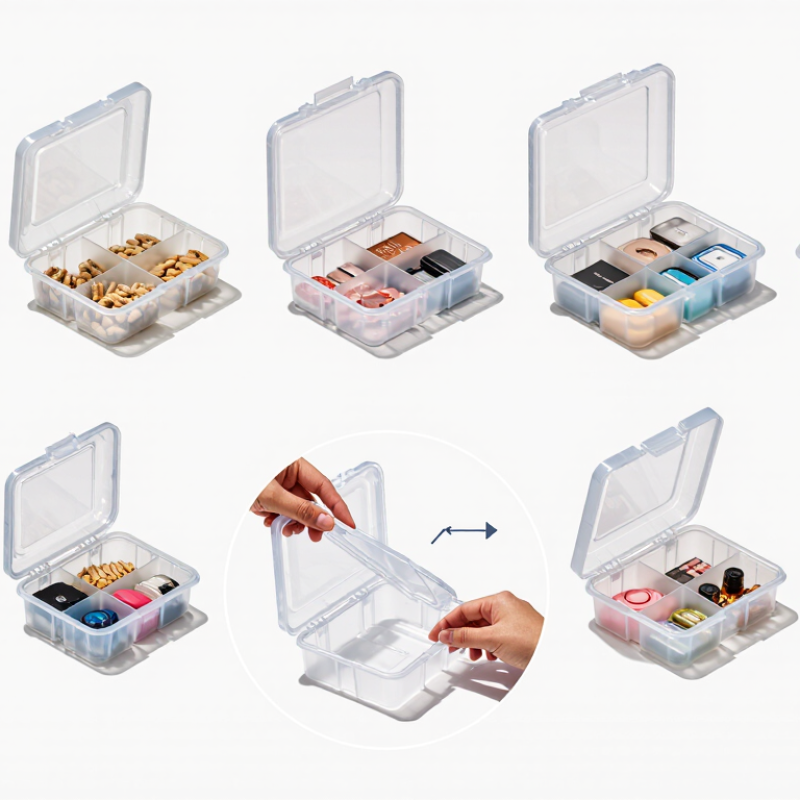
A clamshell box is a package with two connected halves and a hinge. It opens for filling, then closes around the product. Many are thermoformed from plastic; paperboard versions also exist. The shape can protect items while keeping them visible. Snap shut. You will see clamshells around berries, bakery items, small electronics, and hardware. Their ridged edges and locking tabs help hold contents in place during handling.
Food sellers often use vented clamshells for fresh produce, where airflow and visibility matter. A bakery may prefer a flatter, clear lid to show a pastry without opening the pack. Retailers use secure tabs to reduce accidental opening, though the right closure depends on product weight and transport conditions. Clear packaging is not automatically better: glare can hide the product, and a tight fit can bruise delicate fruit. Small details matter.
Material choices deserve equal care. The OECD’s 2022 Global Plastics Outlook estimates that 353 million tonnes of plastic waste were generated worldwide in 2019, with only 9% ultimately recycled. That figure covers plastics broadly, not clamshells alone. Still, it is a useful reminder to check local collection options, material labels, and pack design before choosing a format. A box that protects well but is difficult to sort may create a trade-off worth reconsidering.
Top 10 Suppliers of Clamshell Boxes in China - What Clamshell Boxes Are and How They Are Used
| No. | Clamshell Type | Common Material | Typical Uses | Useful Supplier Capabilities | Key Sourcing Checks |
|---|---|---|---|---|---|
| 1 | Clear hinged retail clamshell | PET or rPET | Small consumer goods, accessories, and products that benefit from visibility on a retail shelf. | Thermoforming, custom cavity design, hinge forming, and options for hanging or stacking. | Confirm the resin type, product fit, closure security, edge finish, and whether recycled content is documented. |
| 2 | Food portion clamshell | PET, rPET, or food-contact polypropylene (PP) | Ready-to-eat portions, baked goods, and takeaway foods, depending on the container's intended conditions. | Food-contact material sourcing, formed-compartment design, and consistent lid-to-base fit. | Check applicable food-contact requirements, temperature limits, and compatibility with the specific food and use. |
| 3 | Produce clamshell | PET or rPET | Berries, cut fruit, and other produce requiring a formed container with a hinged lid. | Vent or drainage-hole options, stacking features, and cavity sizes suited to the product. | Assess ventilation, drainage, product protection, and whether the pack is compatible with the intended storage and distribution conditions. |
| 4 | Molded-fiber clamshell | Molded paper fiber or recycled pulp | Takeaway meals and food service applications where an opaque, fiber-based container is suitable. | Pulp molding, compartment tooling, and optional surface treatments where appropriate. | Ask for evidence supporting food-contact suitability and clarify resistance to grease, moisture, and heat for the intended application. |
| 5 | PP hinged-lid container | Polypropylene (PP) | Food containers and other applications where the selected PP grade and design meet the required use conditions. | Injection molding or thermoforming, hinge design, and dimensional consistency. | Verify the exact resin grade, temperature-use limits, closure performance, and relevant compliance documents. |
| 6 | Electronics protective clamshell | PET, rPET, or other specified plastics | Small electronic accessories and components that need a formed cavity to limit movement in the pack. | Custom cavity tooling, sample development, and coordination with an insert card or outer carton. | Check component fit, sharp-edge protection, static-control needs where applicable, and transit-pack compatibility. |
| 7 | Hardware and small-parts clamshell | PET, rPET, or PVC where permitted and specified | Fasteners, tools, craft items, and other small retail products. | Robust hinge and closure design, custom cavities, and options for retail display features. | Specify the product weight and shape, test opening and closure, and confirm any retailer packaging requirements. |
| 8 | Medical or laboratory component clamshell | Material selected to meet the product's cleanliness and regulatory requirements | Protection and organization of components; suitability depends on the product and required packaging system. | Controlled production processes, traceability, and documentation appropriate to the intended application. | Do not assume sterility or medical-device compliance from the package shape alone; verify the required standards and validation with the supplier. |
| 9 | Custom multi-cavity clamshell | PET, rPET, PP, or molded fiber, depending on design requirements | Kits, assortments, and products containing several pieces that need separate compartments. | 3D design support, prototype sampling, custom tooling, and cavity layout development. | Review a physical sample for fit, loading, removal, closure, and protection before approving production tooling. |
| 10 | Printed or card-backed clamshell | Clear formed plastic paired with a printed paperboard card | Retail products needing product visibility together with printed instructions, branding, or product information. | Formed-pack production and coordination of card dimensions, sealing, and pack assembly. | Confirm card fit, print-file requirements, sealing method, and that required product information is legible on the final pack. |
Related Posts
-
2026 Best Clamshell Packaging Solutions for Sustainable Packaging Needs?
-
How to Choose the Best Small Clamshell Packaging?
-

2026 Top Clamshell Packaging Wholesale Trends and Innovations?
-
Why Choose Plastic Clamshell Packaging for Global Shipping?
-
China Top Companies Producing Clamshell Packaging Solutions?
-
2026 Top Trends in Clamshell Packaging Solutions for Sustainable Products?