U.S. Patent Applications
What Are Plastic Clamshells and What Are They Used For?
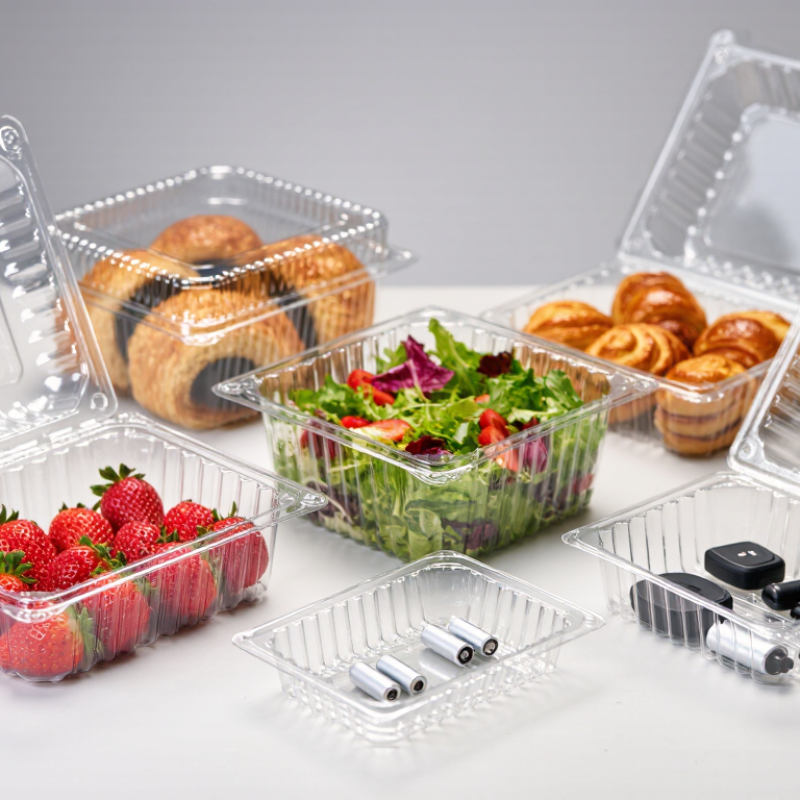
Plastic clamshells are hinged, rigid packages that close around a product like a small shell. You see them around berries, salads, bakery items, electronics, and hardware. Their clear walls make contents easy to inspect. A molded hinge and snap closure can also help keep items together during handling and display. Simple design. Everyday function.
The material varies. Some clamshells are made from PET, including recycled PET; others use different plastics. That difference matters because appearance alone cannot tell shoppers how a package should be sorted. In the United States, the EPA reported that containers and packaging generated 82.2 million tons of municipal solid waste in 2018—28.1% of the total. This figure covers many packaging types, not clamshells alone, so it should not be read as a clamshell recycling rate. Ellen MacArthur, founder of the Ellen MacArthur Foundation, has said, “We need to rethink and redesign the way we make, use and reuse plastics.” Her point applies to packaging design as well as disposal.
Clamshells can protect delicate fruit from bruising and let customers check for mold before buying. That convenience has a cost: rigid packaging can be awkward to open, and recycling options depend on local collection systems and the package’s material. Not every clear clamshell belongs in every recycling bin. Understanding what these packages are, why businesses use them, and what happens after use helps consumers make better-informed choices. The details matter.
What Defines a Plastic Clamshell: Two-Part, Hinged Thermoformed Packaging
A plastic clamshell is packaging with two shaped sections that open and close around a product. In many designs, both sections come from one heated plastic sheet, formed over a mold and joined by a thin hinge. Other versions use two separate pieces. The name describes the shell’s opening shape, not one fixed construction.
Thermoforming gives each half a cavity sized to hold an item, such as a small tool, a cable, or several berries. After forming, the sheet is trimmed, leaving an edge that can be sealed, snapped, or fitted with tabs. A clear front lets shoppers inspect the contents. The hinge needs to bend repeatedly without cracking, yet it is often the package’s most delicate point. Small details matter.
Clamshells can limit handling and help keep products together during storage or transport. Their rigid shape may also take up more space than a flexible pouch. Material thickness, cavity fit, closure style, and product weight all affect performance. A package that closes neatly on a workbench may still pop open after rough handling. Testing with the actual product is more dependable than judging the empty shell alone.
Materials and Manufacture: PET Is Resin Identification Code #1 (ASTM D7611)
Plastic clamshells are hinged containers molded from a single sheet, often used for produce, bakery items, and small household goods. Many are made from polyethylene terephthalate, or PET. Under ASTM D7611, PET is identified by resin identification code #1. The number tells you the resin type, not whether a particular package will be accepted for recycling.
To make a PET clamshell, manufacturers heat a plastic sheet until it softens, then shape it over a mold. Cooling sets the clear walls, shallow ribs, and hinge. These details help the package hold its shape while keeping the contents visible. A snap closure can secure the lid, though thin hinges may crease after repeated opening.
Look for the small #1 mark, often molded into the base. It is useful information. But it can be easy to overread: the code alone does not confirm that local recycling programs accept clamshells. Size, labels, food residue, and sorting equipment can affect handling. Clean, empty packaging is generally easier to sort, but local guidance matters. PET can also be made with recycled content, although appearance and clarity may vary slightly. A faint tint or a rough edge is not proof of poor quality; it may simply reflect material or manufacturing differences.
Common Uses: Food, Electronics, Cosmetics, and Retail Products
What Are Plastic Clamshells and What Are They Used For?
Plastic clamshells are clear packages with two hinged halves that close around a product. Their shape keeps items visible while helping hold them in place. In food packaging, they commonly contain berries, pastries, sandwiches, and prepared salads. Raised sections can prevent delicate fruit from being crushed, while small openings may allow airflow. Food needs packaging made for its intended use, and a clear lid does not guarantee freshness. That visibility matters.
Electronics retailers use clamshells for items such as cables, earbuds, and memory cards. A molded insert can stop a small accessory from sliding around, and the rigid outer shell helps guard against dust and handling. Still, clamshells are not a substitute for protective shipping materials. Not foolproof, though. A package can also be difficult to open, which is frustrating for customers and worth considering during design.
Cosmetics and other retail products use clamshells to display compact items, including brushes, small tools, and personal-care accessories. Clear packaging lets shoppers inspect color, shape, or included components without opening the package. Some designs include a hanging tab for peg displays; others sit on shelves. The fit should be snug, but not so tight that products are hard to remove. I have found that tiny layout choices can matter more than expected: a sharp edge or awkward hinge may leave a poor impression.
What Are Plastic Clamshells and What Are They Used For? — Common Uses: Food, Electronics, Cosmetics, and Retail Products
| Use Category | Common Items | Typical Clamshell Design | What the Packaging Does | Material and Practical Notes |
|---|---|---|---|---|
| Food | Fresh berries, salads, bakery goods, takeaway meals, and deli items | Hinged container with a shaped base and lid; may include ventilation holes or snap closures | Holds food in place, allows contents to be seen, and helps protect items during handling and transport | Food-contact suitability depends on the specific material and intended use. PET and PP are among the plastics used for food containers; microwave suitability should be checked on the package. |
| Electronics | Cables, small accessories, memory cards, and compact components | Clear, shaped package with a fitted cavity; some versions are designed to hang on retail displays | Keeps small products visible and contained, while the formed cavity can reduce movement inside the package | Some electronics require antistatic or electrostatic-discharge (ESD) packaging. A standard plastic clamshell should not be assumed to provide ESD protection. |
| Cosmetics and personal care | Makeup tools, small grooming accessories, travel-size products, and cosmetic sets | Clear formed shell, sometimes paired with a printed insert or backing card | Displays the product and helps keep small components together; the transparent cover can make the item easy to inspect | Packaging must be selected for the product and sales format. A clamshell is an outer package and does not replace the product’s primary container or seal. |
| Retail products and hardware | Fasteners, craft supplies, small tools, toys, and household accessories | Rigid hinged or sealed two-piece shell, often shaped around the item and designed for shelf display | Helps retain the product, supports display, and can make opening or tampering more apparent depending on its closure | Some designs are difficult to open without tools. Recyclability varies with the plastic type, labels, inserts, and local collection rules. |
In brief: A plastic clamshell is a formed package with two halves connected by a hinge or joined together. Its exact material, closure, and protective properties vary by product and application; check package markings and local recycling guidance.
Key Functions: Product Visibility, Protection, and Tamper Evidence
Plastic clamshells are molded packages with two connected halves that fold around a product. Their clear walls let shoppers see the item without opening the package. Color, shape, and small details remain visible on a store shelf. That matters. A buyer can check a tool’s finish or count the pieces inside before purchase. However, glare, labels, or scuffed plastic can make viewing harder than expected.
The shell also helps protect products from dust, light handling, and minor knocks during storage and transport. A close-fitting cavity can keep an item from shifting, though the package must match its shape and weight. Too much empty space may allow movement. Too little can press against delicate surfaces. The fit deserves attention.
Many clamshells use sealed edges or locking tabs that show signs of opening. This gives buyers a useful visual cue if a package appears disturbed. It is not foolproof. A seal can be poorly formed, and damage may occur during shipping rather than through deliberate opening. Checking the closure, edges, and product together gives a more reliable impression than judging the package alone.
Recycling Reality: OECD Found Only 9% of Plastic Waste Was Recycled in 2019
Plastic clamshells are rigid packages with hinged or separate lids. They often hold berries, bakery items, small electronics, and hardware. Their clear walls let shoppers inspect contents, while the molded shape can cushion delicate items. A lid may click shut, but that does not make the package easy to recycle.
The recycling figures are sobering. The OECD reported that only 9% of plastic waste was recycled worldwide in 2019. Only 9%. Most plastic waste was instead landfilled, incinerated, or poorly managed. A clamshell placed in a recycling bin does not automatically become a new package. Local facilities may not accept its plastic type, and food residue can complicate sorting. A sticky berry tray is a small, familiar example.
Check local collection instructions before recycling a clamshell, and empty it first. Some facilities accept certain rigid plastics; others do not. Even a clean package may be rejected if sorting equipment cannot identify or handle it. That part is easy to overlook. Clamshells offer practical protection and visibility, yet their usefulness during a few days of shopping can contrast sharply with the limited share of plastic waste that gets recycled. The gap deserves more attention, including better package design and clearer disposal guidance.
Plastic Clamshells and the Recycling Reality
Plastic clamshells are rigid, hinged containers commonly used to package food and protect or display retail products. Whether a clamshell can be recycled depends on its material and local recycling facilities. In 2019, only 9% of global plastic waste was recycled; the remaining 91% was not recycled.
Source: OECD, Global Plastics Outlook (2022); global plastic waste data for 2019.
Related Posts
-
Top 10 Clamshell Packaging Suppliers Canada Global Buyers?
-

Why Choose Plastic Clamshell Packaging for Global Shipping?
-

How to Find Reliable Clamshell Packaging Wholesale Suppliers?
-
Top 10 Suppliers of Clamshell Boxes in China
-
How to Choose Clear Clamshell Packaging for Your Products?
-
How to Choose Plastic Clamshells for Global Packaging?